
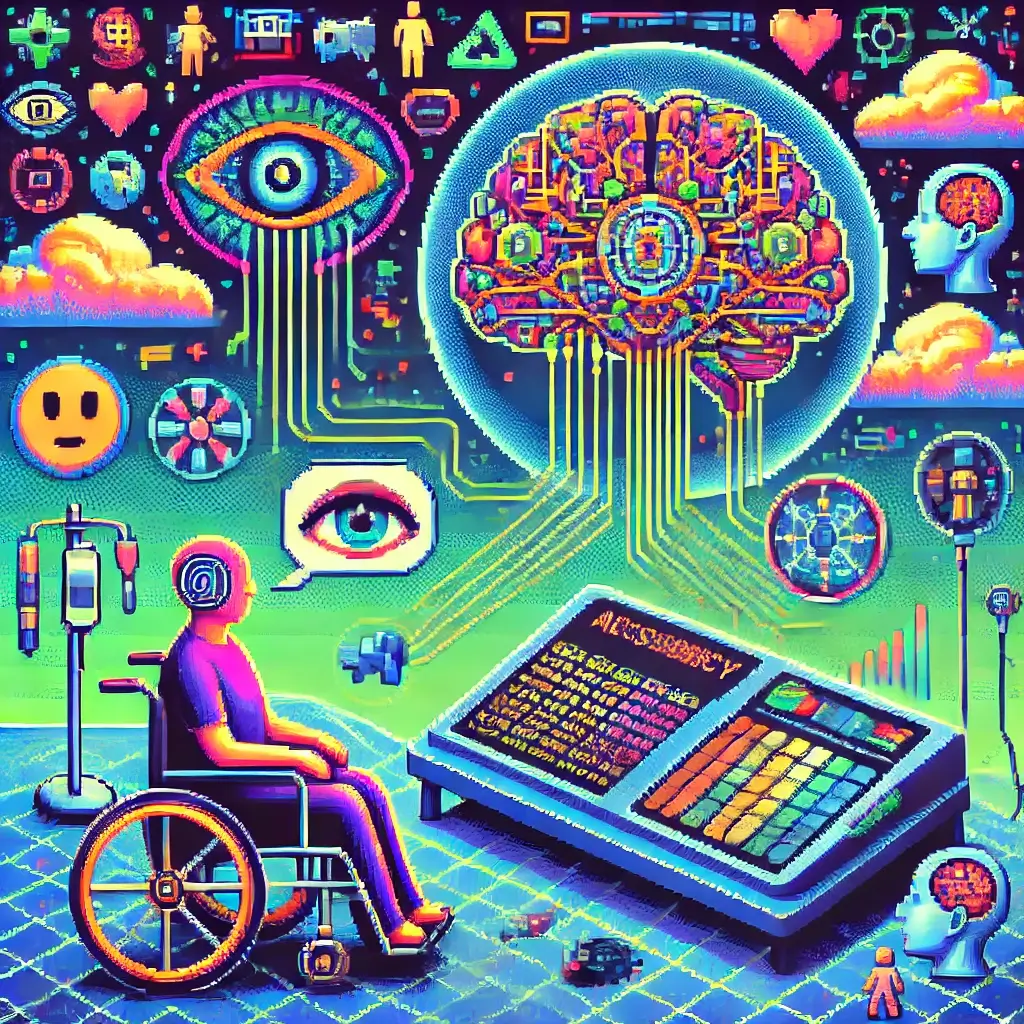
AI Unleashes 1,000 New Possibilities for Rare Disabilities: A Revolution is Here!
Hey there, folks! Have you ever stopped to truly think about what it means to live in a world not quite built for you?
Imagine navigating daily life with a condition so rare, so unique, that even medical professionals might scratch their heads.
It’s not just about physical barriers; it’s about the countless invisible walls that limit participation, communication, and even basic independence.
It’s a tough pill to swallow, but for millions worldwide, this isn’t imagination – it’s their reality.
For those living with rare disabilities, the world can feel like a labyrinth designed without their needs in mind.
Access to information, communication tools, and even just simple everyday interactions can be monumental challenges.
But what if I told you there’s a powerful ally emerging, one that’s tearing down these walls brick by brick?
I’m talking about **Artificial Intelligence**, and it’s not just a buzzword; it’s a beacon of hope, a true game-changer in enhancing accessibility for people with rare disabilities.
We’re talking about a future where technology doesn’t just adapt to us, but truly understands and anticipates our needs, especially for those with the most unique challenges.
It’s exciting, it’s transformative, and honestly, it’s about time!
Join me on a journey to explore how AI is not just enhancing accessibility but completely redefining what’s possible for individuals with rare disabilities.
Let’s dive in! —
Table of Contents
—
Understanding Rare Disabilities: More Than Just Numbers
First things first, what exactly do we mean by “rare disabilities”?
Well, just like rare diseases, rare disabilities are conditions that affect a small percentage of the population.
The exact definition can vary by country, but generally, we’re talking about conditions that affect fewer than 1 in 2,000 people.
Now, while that might sound like a small number, when you add up all the different rare conditions out there, the total number of individuals affected is actually quite significant.
It’s estimated that hundreds of millions of people worldwide live with a rare disease or disability.
And here’s the kicker: because these conditions are rare, research is often limited, treatment options are scarce, and awareness is low.
This means that individuals with rare disabilities often face unique challenges that are simply not addressed by mainstream accessibility solutions.
Think about it: if you’re developing a ramp, you’re building it for a general wheelchair user.
But what if someone has a highly specific mobility challenge that a standard ramp doesn’t address?
What if their disability impacts their ability to process visual information in a way that standard screen readers can’t quite grasp?
This is where the true complexity lies, and this is precisely where AI steps in to fill that gaping void.
It’s not just about one-size-fits-all solutions; it’s about tailor-made innovations. —
The Accessibility Gap: Why Traditional Solutions Fall Short
So, we’ve got a decent understanding of rare disabilities.
Now, let’s talk about why our current accessibility solutions, while fantastic for many, often fall short for this particular group.
Traditional accessibility design often focuses on common disabilities like vision impairment, hearing impairment, or general mobility issues.
And don’t get me wrong, that’s crucial progress!
But when you have a condition that affects, say, proprioception in a unique way, or a rare neurological disorder that impacts speech patterns in an atypical fashion, standard solutions might just miss the mark entirely.
It’s like trying to put a square peg in a round hole – it just doesn’t quite fit.
The problem isn’t a lack of effort; it’s a lack of specific, nuanced understanding and scalable, customizable technology.
Developing bespoke solutions for every single rare disability is economically unfeasible and incredibly time-consuming using traditional methods.
This leaves many individuals feeling isolated, unable to fully participate in education, employment, and social life.
It’s heartbreaking to think about, isn’t it?
Imagine being a brilliant mind trapped because the tools needed to express that brilliance simply don’t exist.
This is the accessibility gap, and it’s a grand canyon for some – vast, deep, and incredibly difficult to traverse.
But guess what? AI is building bridges, and some of them are pretty darn impressive. —
AI: A Beacon of Hope for Bespoke Solutions
Alright, enough with the gloom and doom!
Let’s talk about why AI is making us all giddy with excitement when it comes to rare disabilities.
The magic of AI lies in its ability to learn, adapt, and personalize.
Unlike traditional, rule-based programming, AI can be trained on vast datasets and learn to identify complex patterns and nuances that would be impossible for humans to process at scale.
This means it can create highly individualized solutions tailored to the specific needs of an individual, rather than a broad category of disability.
Think of it like this: instead of a mass-produced suit that might fit “most” people, AI is like a bespoke tailor, crafting a perfect fit for every unique body shape and style preference.
For rare disabilities, this ability to personalize is absolutely revolutionary.
It means we can move beyond generalized accommodations to truly precise and effective tools that genuinely empower individuals.
We’re talking about systems that can understand unique speech patterns, interpret subtle movements, and even predict needs based on subtle physiological cues.
This isn’t science fiction anymore; it’s happening, and it’s exhilarating to witness. —
Personalizing Communication: Breaking Down Language Barriers
One of the most profound impacts AI is having is in the realm of communication.
For many with rare disabilities, traditional speech or text communication can be incredibly challenging.
Imagine having a condition that makes your speech highly atypical, or limits your ability to use your hands for typing.
AI-powered communication tools are stepping in to bridge these gaps in truly remarkable ways.
We’re seeing advancements in **customizable speech recognition**. Traditional speech-to-text might struggle with unique vocalizations, but AI models can be trained on an individual’s specific voice patterns, learning to accurately transcribe their speech, no matter how unconventional it may seem to an untrained ear.
It’s like having a dedicated personal interpreter who understands every nuance of your voice.
Then there’s **gaze-tracking and thought-to-text interfaces**. For individuals with severe motor impairments, simply looking at a letter or even thinking about a word can be translated into text or commands.
This isn’t just about typing; it’s about expressing thoughts, emotions, and needs that were previously locked away.
This is particularly powerful for conditions like Locked-in Syndrome or severe forms of cerebral palsy where traditional communication is almost impossible.
Consider AI-powered **sign language translation** for rare or atypical sign languages.
While standard sign language interpreters are invaluable, for those using lesser-known or highly individualized sign systems, AI vision systems can learn and interpret these unique movements, opening up new avenues for communication.
The beauty of this is that it doesn’t just enable communication; it fosters connection, allowing individuals to truly participate in conversations, share their stories, and engage with the world on their own terms.
It’s giving a voice to those who previously had none, and honestly, that’s just priceless.
If you’re interested in learning more about how AI is revolutionizing communication, check out some of the amazing work being done at places like the Microsoft AI for Accessibility initiative. They’re doing some truly groundbreaking stuff! —
Enhancing Mobility and Navigation: Smart Spaces, Smart Lives
Mobility and navigation can be huge hurdles for people with rare disabilities.
Sometimes, it’s not about being able to walk or use a wheelchair, but about navigating spaces that aren’t designed for their specific way of moving or perceiving the world.
AI is stepping up to make environments more intuitive and navigable.
Think about **AI-powered smart wheelchairs**. These aren’t just regular wheelchairs; they can learn a user’s unique movement patterns, predict their intended direction based on subtle head movements or even eye gaze, and autonomously navigate complex environments while avoiding obstacles.
For someone with unpredictable tremors or limited fine motor control, this is a game-changer, offering a level of independence previously unimaginable.
Then there are **AI-enhanced navigation apps**. Forget generic GPS. These apps can be customized to provide highly specific instructions based on an individual’s unique needs.
For example, if someone has a rare balance disorder, the app could guide them along routes with fewer steps, smoother surfaces, or more handrails, even if it’s a slightly longer path.
They can also integrate with indoor mapping systems to help navigate complex buildings like hospitals or shopping malls, identifying accessible restrooms or quiet zones.
And let’s not forget about **smart home automation integrated with AI**. Imagine a home that anticipates your needs based on your routine and preferences, adjusting lighting, temperature, or even opening doors with a simple verbal command or even a recognized gesture.
For someone with severe physical limitations, this transforms a house into a truly supportive and empowering environment.
It’s about creating “smart spaces” that don’t just react but proactively assist, making daily life significantly less burdensome and more liberating.
It truly makes the world feel a little more welcoming, one intelligent step at a time. —
Cognitive Support and Learning: Unlocking Minds
Rare disabilities often come with complex cognitive challenges, affecting memory, attention, executive functions, or learning styles.
Traditional educational methods and support systems can struggle to adapt to these highly individualized needs.
But AI is proving to be an incredible tool for unlocking learning potential and providing personalized cognitive support.
Consider **AI-powered personalized learning platforms**. These platforms can adapt to an individual’s unique learning pace, style, and cognitive strengths and weaknesses.
For example, if a student with a rare neurodevelopmental disorder struggles with abstract concepts, the AI can provide more concrete examples, visual aids, or break down information into smaller, digestible chunks, continuously assessing their comprehension and adjusting the curriculum accordingly.
It’s like having a personal tutor who intimately understands your brain’s unique wiring.
Then there are **AI assistants for daily executive function support**. For individuals with rare conditions impacting planning, organization, or memory, AI can act as a proactive digital assistant.
It can remind them of appointments, help break down complex tasks into manageable steps, suggest strategies for problem-solving, or even provide real-time prompts to stay focused during a task.
This kind of personalized nudging can be invaluable for maintaining independence and reducing daily stress.
We’re also seeing fascinating developments in **AI for emotional regulation and social skill development**. Some rare conditions can affect social understanding or emotional processing.
AI applications can provide safe, simulated environments for practicing social interactions, offer real-time feedback on emotional cues, or even help analyze and understand complex social situations.
It’s a delicate area, but with careful design, these tools can provide invaluable support in developing crucial life skills.
The goal here isn’t to replace human educators or therapists but to augment their capabilities and provide continuous, tailored support that was previously impossible.
It’s about making learning and cognitive development an accessible and empowering journey for every mind, no matter how uniquely it functions. —
Assistive Robotics: More Than Just Machines, They’re Companions
When you hear “robot,” do you imagine something out of a sci-fi movie?
Well, in the world of accessibility, assistive robotics powered by AI are becoming incredibly tangible and wonderfully helpful.
These aren’t just industrial machines; they’re designed to be companions and helpers, especially for individuals with severe physical limitations or those who require constant support.
Consider **personal care robots**. These AI-driven robots can assist with a range of daily tasks, from fetching objects and preparing simple meals to helping with hygiene or transferring from a bed to a chair.
For someone with a rare condition that severely limits their physical capabilities, these robots can mean the difference between relying heavily on human caregivers and maintaining a significant degree of autonomy.
And let’s not forget the emotional aspect: they can provide a sense of companionship and reduce the feeling of isolation.
Then there are **exoskeletons and wearable robotics**. For individuals with rare neurological or muscular conditions that impact mobility, AI-powered exoskeletons can provide vital support, enabling them to stand, walk, or even manipulate objects with greater stability and control.
The AI learns the user’s gait and movements, providing assistance precisely when and where it’s needed, adapting to their unique movement patterns in real-time.
It’s like getting a new lease on mobility, literally walking tall again.
We’re also seeing **AI-powered therapeutic robots**. These robots, often designed to be engaging and interactive, can assist in physical therapy, occupational therapy, or even emotional support.
They can guide users through exercises, provide encouragement, and collect data on progress, all while making the therapy process more fun and motivating.
They’re particularly valuable for pediatric cases or individuals who find traditional therapy environments overwhelming.
These robots are not replacing human caregivers, but rather augmenting their capabilities and providing consistent, tireless support that can dramatically improve quality of life.
It’s about empowering independence and providing a helping “hand” – or rather, a helping limb – when it’s needed most.
For more on the fascinating world of assistive robotics, you might want to explore resources from institutions like IEEE Robotics and Automation Society. They often publish on cutting-edge developments in this field. —
Early Diagnosis and Intervention: The Power of Prediction
This might not seem directly like “accessibility” in the traditional sense, but trust me, early diagnosis and intervention are absolutely critical for enhancing accessibility and quality of life for individuals with rare disabilities.
The sooner a condition is identified, the sooner appropriate support, therapies, and accommodations can be put in place, often leading to better long-term outcomes.
And guess what? AI is a superstar in this arena!
AI’s ability to analyze vast amounts of complex data makes it an invaluable tool for identifying rare conditions that might otherwise be missed or misdiagnosed for years.
Think about **AI-powered diagnostic tools**. These systems can analyze medical images, genetic data, patient symptoms, and even behavioral patterns, comparing them against massive databases of rare disease profiles.
They can flag subtle indicators that a human eye might overlook, significantly reducing the diagnostic odyssey that many families with rare conditions endure.
I’ve heard countless stories of families spending years, sometimes decades, searching for answers, going from specialist to specialist.
AI has the potential to dramatically shorten that painful journey.
Then there’s **predictive analytics for personalized intervention strategies**. Once a diagnosis is made, or even if a strong risk factor is identified, AI can help predict how a condition might progress for a specific individual based on their unique genetic makeup and clinical profile.
This allows for the development of highly personalized intervention plans, ensuring that therapies, educational support, and assistive technologies are introduced at the most opportune time and in the most effective way.
It’s about being proactive rather than reactive.
This proactive approach means that accessibility solutions aren’t just applied after challenges arise, but are woven into the fabric of an individual’s life from the earliest possible stage, setting them up for greater success and independence from day one.
It’s not just enhancing accessibility; it’s laying the foundational groundwork for a more accessible life. —
Challenges and Ethical Considerations: Navigating the Future Responsibly
Alright, before we get too carried away with all the incredible possibilities, it’s important to hit the brakes for a moment and talk about the challenges and ethical considerations.
No technology, especially one as powerful as AI, comes without its complexities, and we need to navigate this future responsibly.
One major challenge is **data scarcity for rare conditions**.
AI models thrive on data, and by definition, rare disabilities have limited data sets.
This can make it harder to train robust and accurate AI models specifically for these conditions.
We need innovative approaches to data collection, sharing, and synthetic data generation to overcome this hurdle.
Then there’s the issue of **bias in AI algorithms**.
If the data used to train AI models isn’t diverse or representative, the AI can inherit and even amplify existing biases, potentially leading to less effective or even discriminatory outcomes for certain groups.
Ensuring fairness and equity in AI development is paramount.
We also need to seriously consider **privacy and data security**.
AI in healthcare and accessibility often involves highly sensitive personal and medical data.
Robust safeguards and transparent policies are essential to protect this information and build trust.
Who owns the data? How is it used? These are not trivial questions.
Finally, there’s the crucial discussion around **autonomy and over-reliance**.
While AI can provide incredible support, we must ensure it enhances, rather than diminishes, an individual’s autonomy.
We don’t want people to become overly dependent on AI to the point where they lose valuable skills or feel their choices are being dictated by an algorithm.
It’s a fine balance, and it requires continuous dialogue between technologists, individuals with disabilities, caregivers, and ethicists.
Navigating these waters requires careful thought, collaboration, and a commitment to putting human well-being at the absolute center of every technological advancement.
It’s not just about building smart tech; it’s about building wise tech. —
The Human Touch: AI as an Enabler, Not a Replacement
It’s easy to get swept up in the excitement of AI and imagine a future where machines do everything.
But let’s be super clear about something: **AI is an enabler, not a replacement for the invaluable human touch.**
When we talk about enhancing accessibility for people with rare disabilities, we’re not talking about creating a world where people interact solely with robots and algorithms.
We’re talking about empowering individuals to connect more deeply with other humans, to participate more fully in their communities, and to live lives of greater dignity and independence.
AI can bridge communication gaps, but it can’t replicate the empathy of a friend, the nuanced understanding of a family member, or the intuitive care of a dedicated professional.
It can assist with physical tasks, but it can’t offer a comforting hug or share a hearty laugh.
The true power of AI in this space lies in its ability to free up human caregivers to focus on the truly human aspects of care: emotional support, social interaction, and personalized connection.
It allows individuals with disabilities to pursue their passions, build relationships, and engage with the world in ways that were previously limited, precisely because AI takes on some of the more burdensome or routine tasks.
So, as we push the boundaries of AI, let’s always remember that the ultimate goal is to foster more human connection, more independence, and a more inclusive world for everyone.
It’s about using smart technology to cultivate a kinder, more understanding society.
It’s about making sure that every person, no matter their unique challenges, feels seen, heard, and valued.
Because at the end of the day, that’s what true accessibility is all about. —
A Glimpse into the Future: What’s Next for AI in Accessibility?
So, where are we headed with all this amazing AI tech for rare disabilities?
Honestly, the future looks incredibly bright, and it’s evolving at a breathtaking pace!
We’re talking about a future where AI isn’t just a tool, but an intuitive, almost invisible part of our environment, constantly adapting to individual needs.
Imagine **proactive AI companions** that learn your routines, preferences, and even subtle physiological changes to anticipate your needs before you even realize them.
They might gently remind you to take medication, adjust your environment for optimal comfort, or even suggest activities based on your energy levels and interests.
It’s like having a hyper-attuned personal assistant, but one that truly understands your unique body and mind.
Then there’s the promise of **brain-computer interfaces (BCIs)** becoming more sophisticated and widely accessible.
For individuals with severe paralysis or neurological conditions, BCIs could allow direct control of devices, communication, or even prosthetic limbs, simply by thought.
While still in early stages for widespread use, the advancements here, especially with AI interpreting neural signals, are nothing short of astounding.
We’ll also see further integration of **AI into everyday smart infrastructure**.
Public spaces, transportation, and even entire cities could become “smart,” using AI to optimize routes, provide real-time accessible information, and adapt physical environments on demand.
Think about buses that automatically know to lower their ramps for specific passengers, or buildings that adjust their lighting and soundscapes based on the sensory needs of visitors.
The convergence of AI with other emerging technologies like virtual and augmented reality (VR/AR) also holds immense potential for creating immersive training environments, therapeutic experiences, and new forms of communication and social interaction.
Imagine practicing social skills in a safe, AI-driven VR environment, or experiencing a walk through a virtual forest even if physical mobility is limited.
The future isn’t just about making things a little easier; it’s about fundamentally rethinking what’s possible, opening up entire new worlds for people with rare disabilities.
It’s a future where innovation is driven by empathy, and technology serves to amplify human potential in ways we could only dream of just a few years ago.
Want to keep an eye on the bleeding edge of AI in accessibility? Check out reports and initiatives from organizations like the Web Accessibility Initiative (WAI). They’re often at the forefront of these discussions. —
Making It Happen: Your Role in the AI Accessibility Revolution
So, after all this talk about AI and its incredible potential, you might be thinking, “This is great, but what can I do?”
Well, dear reader, you have a role to play in this revolution!
Firstly, **spread the word!** Awareness is key.
The more people who understand the unique challenges faced by individuals with rare disabilities and the transformative power of AI, the more support and resources will flow into this vital area.
Share articles, talk to friends and family, and advocate for inclusive design in your workplaces and communities.
Secondly, if you’re in the tech industry, **advocate for inclusive AI development.**
Push for diverse teams, ethical AI principles, and user-centered design that actively involves individuals with disabilities in the development process.
Their insights are invaluable and can prevent unintended biases or ineffective solutions.
Thirdly, **support organizations** that are working at the intersection of AI and disability.
Whether through donations, volunteering, or simply following their work, your support can make a tangible difference in bringing these innovations to life and getting them into the hands of those who need them most.
Finally, and perhaps most importantly, **foster empathy and understanding.**
Technology is a tool, but true accessibility begins with a shift in mindset.
It’s about recognizing the inherent value and potential of every individual, regardless of their abilities, and committing to building a world where everyone can thrive.
The journey to a truly accessible world for people with rare disabilities is a long one, but with AI as our ally and a collective commitment to innovation and inclusion, we’re not just taking steps; we’re making giant leaps.
It’s an exciting time to be alive, and I truly believe that together, we can unlock a future where every single person has the opportunity to reach their fullest potential.
Let’s make it happen!
Rare Disabilities, AI Accessibility, Assistive Technology, Inclusive Design, Cognitive Support