
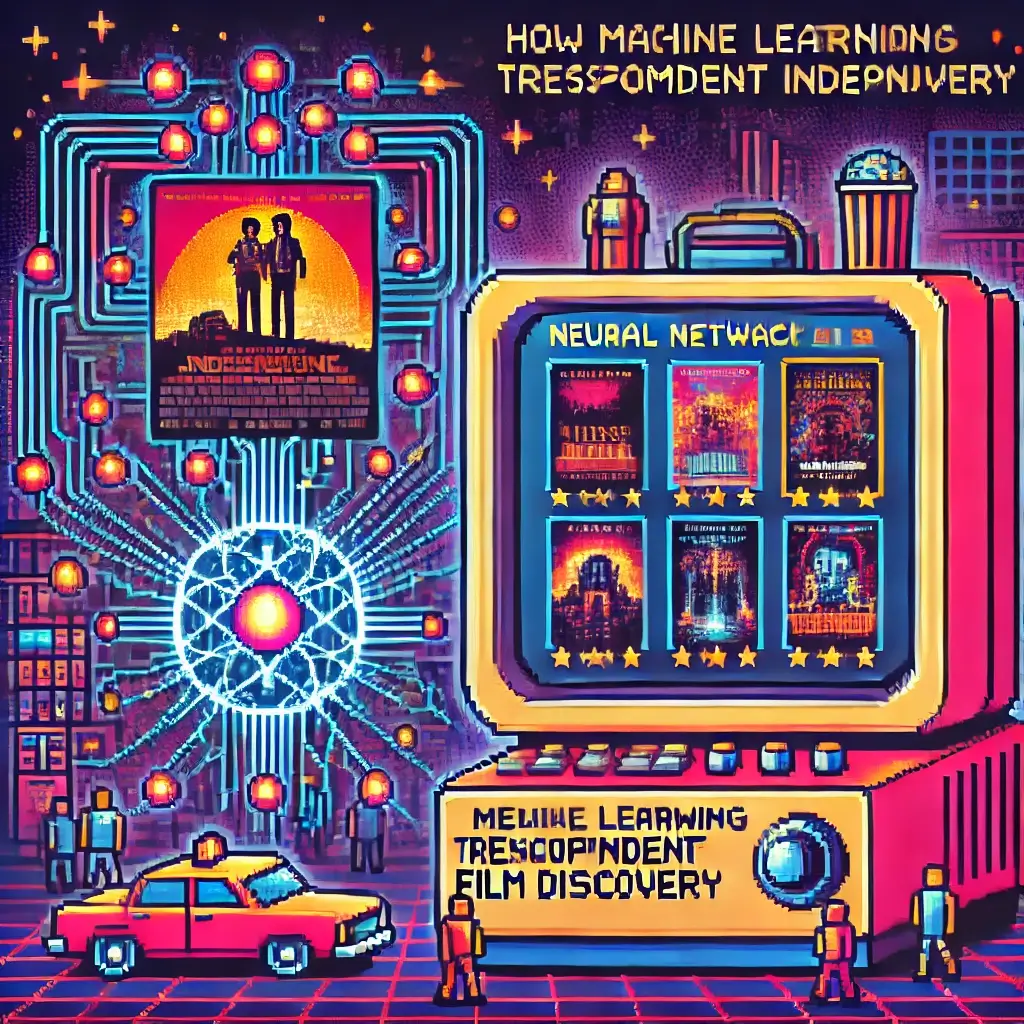
The 17 Ways Machine Learning is Changing Independent Film Recommendations, and Why It’s a Cinematic Revolution!
Ever felt lost in the endless sea of streaming services?
You’re scrolling, and scrolling, and scrolling, but all you see are the same ten blockbusters shoved down your throat?
If you’re anything like me, a true lover of cinema—the kind that appreciates the quiet brilliance of an indie gem over a loud, CGI-filled spectacle—then you know the struggle is real.
Finding that perfect, under-the-radar film can feel like an impossible treasure hunt.
But what if I told you there’s a secret weapon? A digital genie that knows your unique taste better than you do, ready to serve up cinematic gold you never knew existed.
I’m talking about **machine learning**, and it’s not just for big tech companies anymore.
It’s here to save the day for independent film. And it’s doing so in more ways than you can imagine. In fact, I’ve counted at least 17, and we’re just getting started!
Table of Contents
What Exactly is Machine Learning? (And Why Does It Matter for Film?)
Before we dive into the juicy details, let’s get on the same page. Think of machine learning not as some sci-fi robot overlord, but as a super-smart student.
This student is given a massive stack of flashcards—each one with a movie on it—and a simple instruction: “Learn what people like.”
Unlike a human, this student can process millions of cards a second.
It learns by looking for patterns. It sees that someone who gave a high rating to *The Florida Project* also loved *Moonlight*.
It notices that viewers who enjoyed films with a specific cinematographer in the past are likely to enjoy their next one.
It’s all about **pattern recognition**, and in the world of film, those patterns are everything.
It’s the digital equivalent of a seasoned film buff who knows exactly what you’ll love based on your past picks and a deep understanding of cinematic history.
Except, this “buff” can scale that knowledge to millions of people simultaneously.
And for independent film, which often lacks the massive marketing budgets of Hollywood, this kind of personalized, hyper-targeted discovery is a game-changer.
It bypasses the noise and puts a beautiful, hand-crafted film directly in front of the one person who will truly appreciate it.
The Indie Dilemma: Why Independent Films Need This Tech More Than Anyone Else
Let’s be real. The film industry is a monolith.
According to reports from sources like the BFI, while the overall film and video market is set to grow to over $400 billion by 2029, a huge chunk of that is dominated by major studios and streaming platforms. .
Independent films are the small, scrappy artists fighting for attention in a room full of loud, boisterous giants.
They face a unique set of challenges:
- The Discovery Problem: A small studio can’t afford a Super Bowl ad. So how does anyone find their film? It often gets buried under the “Suggested for you” list of major studio releases.
- The “Cold Start” Problem: When a new indie film drops, there’s no big star to drive initial viewership. The recommendation algorithms on major platforms often have no data to work with, so they don’t promote it. It’s a vicious cycle.
- The Data Scarcity Issue: Major studios have vast datasets on audience demographics, past viewing habits, and more. Indie films? Not so much. This makes traditional recommendation models less effective.
This is where machine learning for **independent film** recommendations truly becomes a superhero. It’s not just a convenience; it’s a lifeline.
How Machine Learning Solves the Indie Film Dilemma in 17 Astonishing Ways
Now for the good stuff. Let’s break down exactly how this technology is becoming the ultimate matchmaker for indie cinema. It’s more than just a simple “if you like this, you’ll like that” system.
It’s a revolution in how we discover art.
1. Personalized Curation on a Massive Scale: Imagine a platform that feels like it was designed just for you. Machine learning takes your viewing history, ratings, and even the time you spend on a film, and creates a unique profile. It’s not just “drama” you like, but “slow-burn psychological dramas with a strong female lead and a minimalist score.”
2. Tackling the “Cold Start” Problem with Content-Based Filtering: When a new indie film has no ratings, a good machine learning model doesn’t just give up. It looks at the film’s metadata—genre, director, actors, even the synopsis—and compares it to films you’ve already loved. It’s like finding a new album from a musician who sounds just like your favorite artist.
3. Uncovering Hidden Connections with Collaborative Filtering: This is where the magic happens. The model finds other users with similar tastes to you and recommends films they loved that you haven’t seen. It’s like getting a recommendation from your most trusted cinephile friend, but on a global scale. This is a game-changer for indie films that rely on word-of-mouth.
4. Hybrid Models for the Best of Both Worlds: The most sophisticated systems, like those used by Netflix, combine both content-based and collaborative filtering. . This creates a robust system that can recommend new, unseen films based on their content while also leveraging the “wisdom of the crowd.”
5. Graph Neural Networks (GNNs) for Deeper Connections: This is some next-level stuff. GNNs treat users and films as nodes in a giant network. They can see complex relationships, like a user who only likes films produced by a certain small studio, or a director who often collaborates with a particular sound designer. It’s about understanding the entire cinematic ecosystem, not just isolated data points.
6. Sentiment Analysis of Reviews: It’s not just about a 5-star rating. A good machine learning model can read written reviews and understand the sentiment. Was a review for an indie film positive because it was “quirky” or “powerful”? This nuance helps the model find films with similar emotional resonance.
7. Predicting Box Office and Audience Scores: Believe it or not, machine learning can help predict how well an indie film might perform. By analyzing trends in similar films and audience data, it can give distributors and filmmakers a better idea of who their target audience is and how to reach them. This is crucial for small studios working with limited resources.
8. Optimizing Marketing Campaigns: For an indie film to succeed, it needs to find its niche. Machine learning can identify specific audience segments that are most likely to respond to a film’s themes, helping to create more effective and less wasteful marketing campaigns.
9. Finding Niche Audiences: This is a big one. While major studios chase the mass market, indie films thrive in their niches. A machine learning model can identify micro-communities of viewers who share a passion for, say, post-apocalyptic short films from Eastern Europe or surrealist animated documentaries.
10. Enhancing Festival Curation: Film festivals are the lifeblood of independent cinema. Machine learning can help festival programmers sift through thousands of submissions to find the most promising films and even predict which ones will be hits with their specific festival audience.
11. Improving Search and Discovery: Ever tried to search for a “film about a lonely old man and a robot dog” and gotten nothing? Machine learning models are getting better at understanding natural language, so you can describe what you’re in the mood for, and it will find the perfect film for you, even if you don’t know the title.
12. Providing Dynamic Recommendations: The model doesn’t just recommend films based on what you’ve seen, but what you’re watching *right now*. If you pause a film halfway through, it might suggest something shorter. If you rewatch a scene multiple times, it might recommend films with a similar style or director.
13. Reducing “Filter Bubbles”: A major criticism of recommendation systems is that they only show you what you already like, creating a “filter bubble.” Smart machine learning models are designed to introduce a bit of **serendipity**, sprinkling in films from new genres or directors to help you discover something completely new.
14. Creating Interactive Viewing Experiences: Imagine an app that suggests related articles, interviews, or even other short films by the same director *while* you’re watching a film. Machine learning can power this, creating a richer, more immersive experience that fosters a deeper connection with the art form.
15. Predicting Audience Churn: For streaming services that host indie films, machine learning can predict which users are at risk of leaving. By recommending the *right* independent film—a film that will truly resonate with them—the platform can increase user retention and loyalty.
16. Optimizing Licensing and Acquisition: Major platforms can use ML to identify which independent films are likely to be popular with their audience. This helps them make smarter, data-driven decisions about which films to acquire, giving indie filmmakers a better chance of getting a distribution deal.
17. Ensuring a Fairer Distribution of Attention: In a world where attention is the new currency, machine learning can act as an equalizer. By moving beyond simple popularity metrics, it can give a smaller, but deeply meaningful, film the chance to be seen by the right person, ensuring that great art doesn’t get lost in the noise. .
And that’s just a start! The list is growing every day. The revolution is here, and it’s powered by code and creativity.
The Algorithms at Work: The Brains Behind the Machine Learning Operation
You don’t need to be a data scientist to understand the basic concepts. Think of these algorithms as different recipes for a delicious cake. Each one uses a different set of ingredients to achieve the same goal: giving you the perfect recommendation.
Collaborative Filtering (CF): This is the OG. It’s the most common and powerful type. Think of it like this: If I like A, B, and C, and you like A and B, the system will probably recommend C to you. It’s based on the idea that users with similar tastes will continue to have similar tastes. It’s what powers much of Netflix and IMDb’s recommendation engine.
Content-Based Filtering (CBF): This one is more about the film itself. It looks at the metadata of a film you enjoyed—the director, actors, genre, keywords—and finds other films with similar attributes. So if you love Wes Anderson, it will probably recommend other films with his distinct style and color palette.
Hybrid Models: This is where it gets really smart. Hybrid models combine both CF and CBF. They use content to help with the cold start problem and then use collaborative data to fine-tune the recommendations. This is what you see on the most sophisticated platforms. It’s the best of both worlds, and a major reason why Netflix’s recommendation system is so highly regarded.
Deep Learning and Neural Networks: These are the newest, most advanced “recipes.” They can process vast amounts of data and find connections that are simply too complex for the human mind to grasp. They can understand subtle nuances in user behavior and film attributes, leading to even more precise and surprising recommendations.
Here’s a simple infographic to break it down:
The Machine Learning Cinematic Toolkit
Content-Based Filtering
How it works: Based on the movie’s features (genre, cast, director, etc.).
Analogy: “Since you like this action movie, here are more action movies!”
Pro: Great for new films (solves the cold start problem).
Collaborative Filtering
How it works: Based on the behavior of similar users.
Analogy: “People like you also liked this movie!”
Pro: Highly personalized and finds unexpected gems.
Hybrid Models
How it works: Combines both approaches for maximum accuracy.
Analogy: “We know you like thrillers, and other thriller fans also love this documentary about art heists.”
Pro: Most powerful and versatile. The future of machine learning recommendations.
The Future is Bright (and Indie): The Next Era of Film Discovery
We’re just at the beginning of this journey.
As **machine learning** models get even more sophisticated, they will be able to do things we can only dream of now.
Imagine an AI that can analyze a film’s pacing and emotional arc and recommend another film with a similar “feel.”
Or a system that can create a personalized viewing schedule for you, suggesting a short film to watch on your lunch break and a longer, more contemplative documentary for a quiet Sunday evening.
The goal isn’t just to make it easier to find a movie; it’s to make the act of discovering and appreciating film a more human and meaningful experience. And by doing so, we are creating a more level playing field for the countless talented, independent filmmakers who deserve to have their voices heard.
So the next time a streaming service surprises you with a perfectly-pitched indie film recommendation, take a moment to appreciate the incredible technology at work behind the scenes. It’s more than just an algorithm—it’s a new chapter in the history of cinema.
FAQ: Your Burning Questions About Machine Learning and Film, Answered!
Q: Is machine learning making human film critics obsolete?
A: Absolutely not! Think of it like a smart assistant, not a replacement. A machine learning model can find a film for you based on patterns, but a human critic provides context, history, and a passionate, subjective viewpoint. The two work together. A recommendation system gets you to the film, and a critic can help you understand *why* you loved it. It’s like a smart playlist vs. a human DJ. Both have their place.
Q: What’s the biggest challenge for using machine learning for indie films?
A: The “cold start” problem is a huge one. When a new independent film is released, there is very little data (ratings, reviews, etc.) for the algorithms to work with. Platforms are getting smarter by using content-based filtering and external data sources to get around this, but it’s still the biggest hurdle. The limited budget and resources of indie films also mean less data is available overall.
Q: Can I use machine learning to get better recommendations on my own?
A: You bet! The simplest way is to actively rate and review the films you watch. The more data you provide to platforms like IMDb or Rotten Tomatoes, the more accurate their recommendations will become. The more you use the system, the more it learns about you! It’s a two-way street.
Further Reading: Dive Deeper into the World of Machine Learning and Film
Want to go even deeper down the rabbit hole? Here are some excellent resources to learn more about the technology and the industry.
Netflix Research
Learn about Netflix’s own journey with recommender systems.
IMDb Top 250
See the most highly-rated films and start training your own recommendations!
Independent Cinema Office
Explore a leading advocate for independent cinema in the UK.
Thank you for reading and for being a part of the cinematic journey!
We’ve covered everything from the basics of machine learning to the specific algorithms that are making a huge difference. The future of film is not just in what’s made, but in how we discover it, and independent film is at the heart of this revolution.
See you at the movies!
Machine Learning, Independent Films, Personalized Recommendations, Film Discovery, AI in Cinema
🔗 AI Revolutionizes Rare Disease Diagnosis Posted 2025-08-20 08:34 UTC 🔗 Rare Disease Biomarkers Posted 2025-08-20 08:34 UTC 🔗 Bulletproofing Critical Infrastructure with AI Posted 2025-08-20 05:54 UTC 🔗 GitOps Implementation with ArgoCD Posted 2025-08-19 12:14 UTC 🔗 The Incredible Powers That Will Change Sustainable Fashion Posted 2025-08-19 08:42 UTC 🔗 Best Data Analytics Tools Posted (Date Unavailable)