
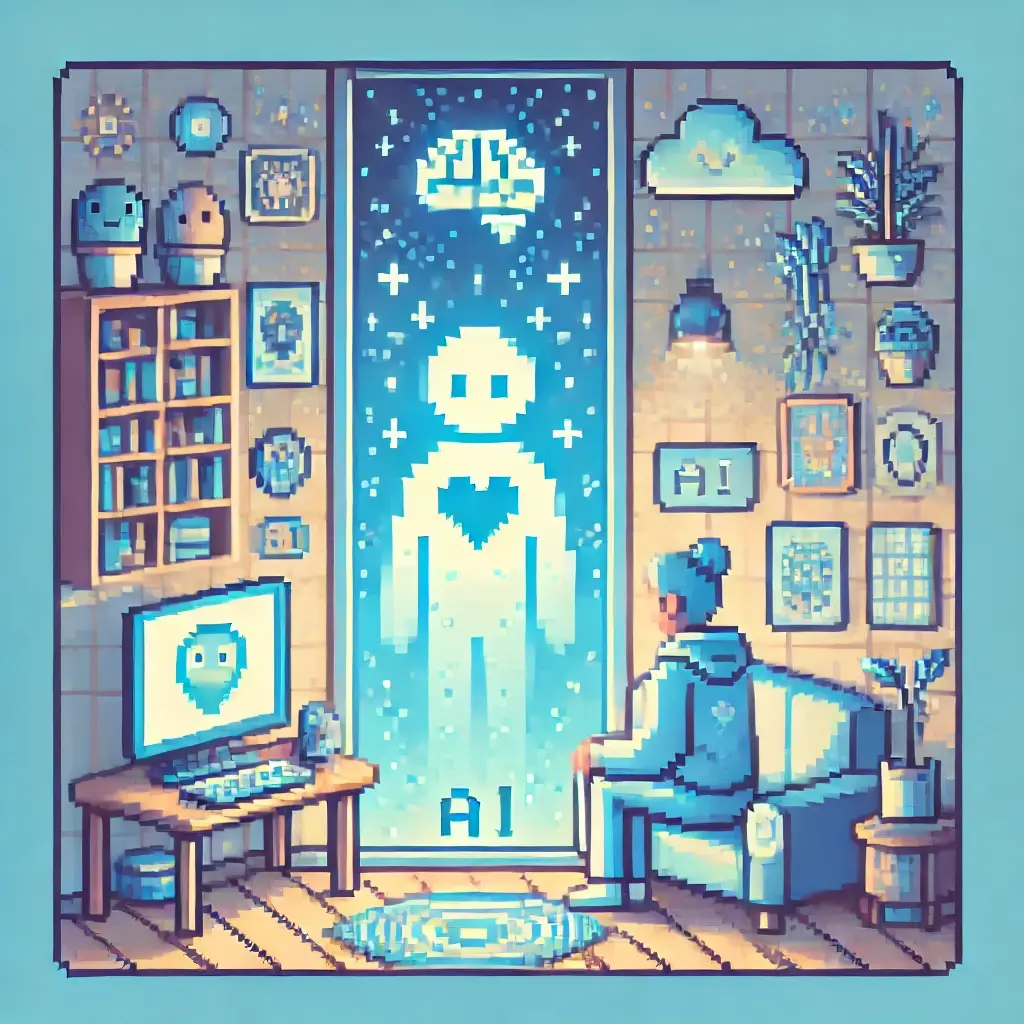
AI Revolutionizes Mental Health: 3 Breakthroughs You Need to Know!
Hey there, fellow humans! Let’s talk about something that’s probably touched all of our lives in one way or another: mental health. It’s a rollercoaster, isn’t it?
One moment you’re soaring, the next you feel like you’re plummeting into a dark abyss. And for too long, getting the right support has felt like navigating a labyrinth blindfolded.
But what if I told you there’s a game-changer on the horizon, something that’s not just promising but already making waves?
I’m talking about **AI in personalized mental health therapy**, and honestly, it’s nothing short of revolutionary.
It’s not some dystopian future where robots replace therapists; it’s about empowering us with tools that can genuinely help.
I remember a time when even admitting you needed help was stigmatized, let alone finding someone who truly “got” what you were going through.
The waiting lists were endless, the costs prohibitive, and the “one-size-fits-all” approach often left you feeling more misunderstood than before.
But with AI, we’re seeing a seismic shift. We’re moving towards a world where support is more accessible, more personalized, and dare I say, more human, in some unexpected ways.
So, buckle up, because we’re about to dive deep into how artificial intelligence is changing the face of mental health, for the better!
I’ve personally seen the struggles, both in myself and in those I care about, and that’s why this topic resonates so deeply with me.
This isn’t just theory; it’s about real people getting real help.
Let’s explore these incredible advancements together. —
Table of Contents
—
What Exactly Is AI in Mental Health, Anyway?
Alright, let’s clear the air. When I say AI, I know some of you might picture Terminator or HAL 9000. Forget that!
In the context of personalized mental health therapy, AI isn’t about sentient robots taking over your therapy sessions.
Instead, think of it as a super-smart assistant, tirelessly working behind the scenes to make mental health support more efficient, more tailored, and more widely available.
At its core, AI in this field involves algorithms that can analyze vast amounts of data – think speech patterns, text conversations, even physiological responses – to identify trends, predict risks, and offer personalized interventions.
It’s like having a highly organized, lightning-fast research assistant for every single person seeking help.
For example, imagine a system that can pick up subtle changes in your voice tone or word choice over several weeks, suggesting you might be experiencing increased anxiety, even before you fully realize it yourself.
That’s the kind of subtle yet powerful insight AI can offer.
It’s not replacing the empathy or intuitive understanding of a human therapist; rather, it’s augmenting it, providing data-driven insights that can make therapy much more precise.
We’re talking about tools that can help therapists understand their clients better, and tools that can offer support to individuals who might not otherwise have access to traditional care.
It’s about leveraging technology to extend the reach of mental health support, not diminish the human element.
Breakthrough 1: The Accessibility Revolution – Therapy at Your Fingertips
This, for me, is one of the biggest wins. Access to mental health care has always been a colossal barrier for so many people.
Whether it’s living in a rural area with no local therapists, facing stigma, lacking insurance, or simply not having the time to commute to appointments, the hurdles are immense.
Enter AI-powered tools, and suddenly, the landscape changes dramatically.
Think about conversational AI chatbots like Woebot or Wysa. These aren’t meant to replace human therapists, but they offer an incredibly valuable first line of defense, 24/7.
I’ve heard stories from friends who felt too embarrassed to talk to anyone, but found comfort and a sense of validation in chatting with an AI program late at night.
It’s like a digital diary that talks back, providing cognitive behavioral therapy (CBT) techniques, mindfulness exercises, or simply a non-judgmental ear when you need it most.
This isn’t just about convenience; it’s about breaking down those walls of shame and logistical nightmares.
Imagine someone struggling with severe social anxiety. The idea of scheduling an appointment, traveling to an office, and sitting face-to-face with a stranger might be paralyzing.
But interacting with an AI at home, on their own terms, can be the crucial first step they need to engage with mental health support.
AI also facilitates teletherapy, making it easier to match clients with therapists across geographical boundaries, expanding options beyond what’s locally available.
It can manage scheduling, reminders, and even initial assessments, freeing up human therapists to focus on what they do best: providing compassionate, nuanced care.
This accessibility aspect of AI in personalized mental health therapy is truly a game-changer, ensuring that more people, regardless of their circumstances, can find a pathway to support.
It’s about democratizing mental well-being, one accessible session at a time.Learn More About AI & Mental Health Accessibility
Breakthrough 2: The Power of Personalization – AI That Truly “Gets” You
Have you ever felt like you’re just another case file in the system? That your unique struggles are being squeezed into a generic box?
Traditional therapy, while invaluable, can sometimes struggle with the sheer diversity of human experience.
This is where the magic of AI in personalized mental health therapy truly shines.
AI can analyze a person’s specific needs, preferences, and even their progress over time with a level of detail and speed that’s simply impossible for a human alone.
Imagine an AI sifting through your journal entries (if you choose to share them, of course, privacy is key!), your communication patterns, and your responses to different therapeutic prompts.
It can identify recurring themes, triggers, or even subtle shifts in your emotional state that might be missed in weekly sessions.
This isn’t about mind-reading; it’s about pattern recognition on a grand scale.
Based on this analysis, the AI can then recommend highly specific, tailored interventions.
For someone struggling with sleep, it might suggest a particular guided meditation or a specific CBT-I (Cognitive Behavioral Therapy for Insomnia) exercise.
For another, battling social anxiety, it might offer prompts for exposure therapy or role-playing scenarios to practice social interactions.
It’s like having a custom-built therapy plan, constantly adapting to your evolving needs, rather than a one-size-fits-all approach.
I recall a friend who struggled with chronic procrastination, which fed into her anxiety. A general anxiety program wasn’t cutting it.
But an AI-powered app she tried focused precisely on breaking down her procrastination habits, offering micro-tasks and immediate positive reinforcement.
It was tailored to *her* specific manifestation of anxiety, and it made a tangible difference.
This level of precision means higher engagement and, ultimately, more effective outcomes.
It respects the individuality of each person’s journey, ensuring that the support provided is genuinely relevant and impactful.
This ability of AI to personalize mental health therapy is transforming it from a broad strokes approach to a finely tuned art.Discover More on Personalized AI Therapy
Breakthrough 3: Early Detection & Prevention – Catching Challenges Before They Escalate
This might just be the quiet superstar of AI in personalized mental health therapy.
Imagine being able to identify subtle signs of distress or escalating mental health challenges before they spiral into a full-blown crisis.
That’s the immense potential of AI in early detection and prevention.
Our digital footprints – the way we type, the words we use online, our sleep patterns tracked by wearables, even our social media activity (with explicit consent and strict privacy protocols, of course!) – can contain valuable clues.
AI algorithms are being developed to analyze these subtle indicators.
For instance, a sudden significant drop in social media engagement, or an increase in negative sentiment in online posts, could trigger an alert to a mental health professional (if the user has opted into such a service and given permission).
It’s not about surveillance; it’s about proactive care.
Think about a young person showing early signs of depression, perhaps withdrawing from friends or expressing feelings of hopelessness in their online interactions.
In a traditional setting, this might go unnoticed until it becomes severe.
But an AI monitoring tools, integrated responsibly, could flag these changes, allowing for timely intervention – perhaps a gentle suggestion to talk to someone, or a recommendation for a supportive resource.
This preventative aspect is huge. It means shifting from a reactive model of mental health care, where we often wait until things are critical, to a proactive one.
It’s like a smoke detector for your mental well-being, giving you an early warning before the whole house is on fire.
This doesn’t just save individuals from immense suffering; it also reduces the burden on an already stretched healthcare system.
By intervening early, we can prevent conditions from worsening, requiring more intensive and costly treatments down the line.
The potential for AI to act as a silent guardian, helping us spot the whispers of distress before they become shouts, is truly inspiring.Explore AI in Mental Health Research
The Human Touch: Where AI and Therapists Form a Dream Team
Now, let’s address the elephant in the room: Is AI going to replace therapists? Absolutely not!
And frankly, anyone who thinks that probably hasn’t truly grasped the complexity and nuance of human emotion, or the profound connection forged in a therapeutic relationship.
What AI does, beautifully, is enhance and empower human therapists.
Think of it as a highly skilled co-pilot, not the main pilot.
Therapists can leverage AI tools for administrative tasks, like scheduling or managing patient records, freeing up more of their valuable time for actual client interaction.
AI can also provide therapists with data-driven insights into their clients’ progress, identifying patterns or areas where specific interventions might be more effective.
Imagine a therapist using an AI dashboard that shows a client’s anxiety levels have consistently spiked on Tuesday evenings.
That’s a tangible piece of data that can spark a targeted conversation, leading to breakthroughs that might otherwise take weeks to uncover.
Moreover, AI can help bridge the gap between sessions.
For example, an AI chatbot can reinforce therapeutic techniques learned in session, provide mindfulness exercises, or simply check in with a client between appointments, offering a continuous thread of support.
This blended care model, where human empathy and intuition meet AI efficiency and data analysis, is where the real magic happens for personalized mental health therapy.
It allows therapists to focus on the deep, relational work – the active listening, the empathetic mirroring, the challenging of cognitive distortions – while AI handles the heavy lifting of data processing and personalized resource delivery.
It’s about creating a more robust, holistic, and ultimately more effective ecosystem for mental well-being.
We’re talking about a partnership, not a replacement. And that, my friends, is a win-win.
Navigating the Road Ahead: Challenges and Ethical Considerations
Okay, so I’ve painted a pretty rosy picture, haven’t I? And for good reason – the potential of AI in personalized mental health therapy is truly exhilarating.
But like any powerful tool, it comes with its own set of challenges and ethical considerations that we absolutely *must* address head-on.
First and foremost, there’s the **data privacy and security** elephant.
Mental health data is incredibly sensitive, and the thought of it being compromised is, frankly, terrifying.
We need robust encryption, anonymization techniques, and stringent regulations to ensure that personal information is protected at all costs.
This isn’t just about compliance; it’s about trust.
If people don’t trust the systems, they won’t use them, and all this potential goes to waste.
Then there’s the issue of **bias in algorithms**.
AI learns from data, and if that data reflects existing societal biases – say, against certain demographics or cultural groups – the AI could inadvertently perpetuate or even amplify those biases in its recommendations or assessments.
This is a serious concern, particularly in a field as nuanced and diverse as mental health.
We need diverse teams building these algorithms and rigorous testing to mitigate bias.
Another point is the **lack of empathy and nuance**.
While AI can simulate conversation, it doesn’t *feel* or *understand* emotions in the same way a human does.
A human therapist can pick up on subtle cues, understand sarcasm, interpret silence, or offer a comforting presence that an algorithm simply cannot replicate.
AI should be a support, not a substitute, for these profoundly human aspects of therapy.
Finally, we need to consider the **digital divide**.
Not everyone has access to smartphones, reliable internet, or the digital literacy required to fully utilize these AI tools.
We must ensure that the advancements in AI don’t inadvertently widen the gap for those who are already underserved.
These aren’t insurmountable obstacles, but they require careful thought, ongoing research, and a commitment to ethical development.
It’s a tightrope walk, but one we must navigate carefully to truly harness the benefits of AI in personalized mental health therapy for everyone.
The Future is Bright (and Smart): My Hopes for AI in Mental Health
Looking ahead, I feel a genuine sense of optimism about the future of AI in personalized mental health therapy.
It’s not a magic bullet, but it’s a powerful accelerant for positive change.
My hope is that we move towards a truly integrated model where AI isn’t just a separate tool, but a seamlessly woven fabric within the broader mental healthcare ecosystem.
Imagine a world where mental health check-ups are as routine as physicals, proactively supported by intelligent systems that provide gentle nudges and personalized resources before issues escalate.
I envision AI not only helping individuals directly but also empowering communities.
Perhaps AI can analyze aggregated, anonymized public health data to identify communities at higher risk for certain mental health challenges, allowing for targeted public health campaigns and resource allocation.
Think about how transformative that could be for underserved populations!
I’m also excited about the potential for AI to contribute to mental health research.
By analyzing vast datasets of therapeutic interactions (again, ethically and with consent!), AI could help us uncover new insights into what works best for whom, leading to even more effective and personalized interventions.
It’s like turning every therapy session into a learning opportunity, not just for the individual, but for the entire field.
And let’s not forget the potential for **preventative mental health education**.
AI could power highly engaging, interactive educational modules that teach coping skills, emotional regulation, and resilience from an early age, tailored to individual learning styles and preferences.
Ultimately, my biggest hope is that AI helps us dismantle the persistent stigma surrounding mental illness.
By making mental health support more accessible, less intimidating, and more integrated into our daily lives, we can normalize the conversation and encourage more people to seek the help they deserve.
The journey is just beginning, but with careful, ethical, and human-centered development, AI in personalized mental health therapy has the power to light up countless lives.
Final Thoughts: A New Dawn for Mental Well-being
As we wrap this up, I hope you feel as excited and cautiously optimistic about the role of AI in personalized mental health therapy as I do.
It’s a journey, not a destination, and there will undoubtedly be bumps along the way.
But the promise of a future where mental health support is truly accessible, deeply personalized, and proactively preventative is a vision worth striving for.
We’re moving beyond the days of one-size-fits-all and into an era where technology can meet us where we are, offering a helping hand tailored to our unique needs.
Remember, it’s not about replacing the invaluable human connection in therapy, but about augmenting it, extending its reach, and making it more effective than ever before.
So, let’s keep the conversation going, advocate for ethical development, and embrace this incredible wave of innovation.
Our collective mental well-being depends on it.
After all, a healthier mind leads to a happier life, and if AI can play a part in that, then I say, bring it on!
Mental Health, AI Therapy, Personalized Care, Digital Well-being, Accessible Support
🤖 Rural Elder Care: AI & Robotics 🧠 AI vs Deepfake Misuse 🎮 Indie Game Assets Revolution