
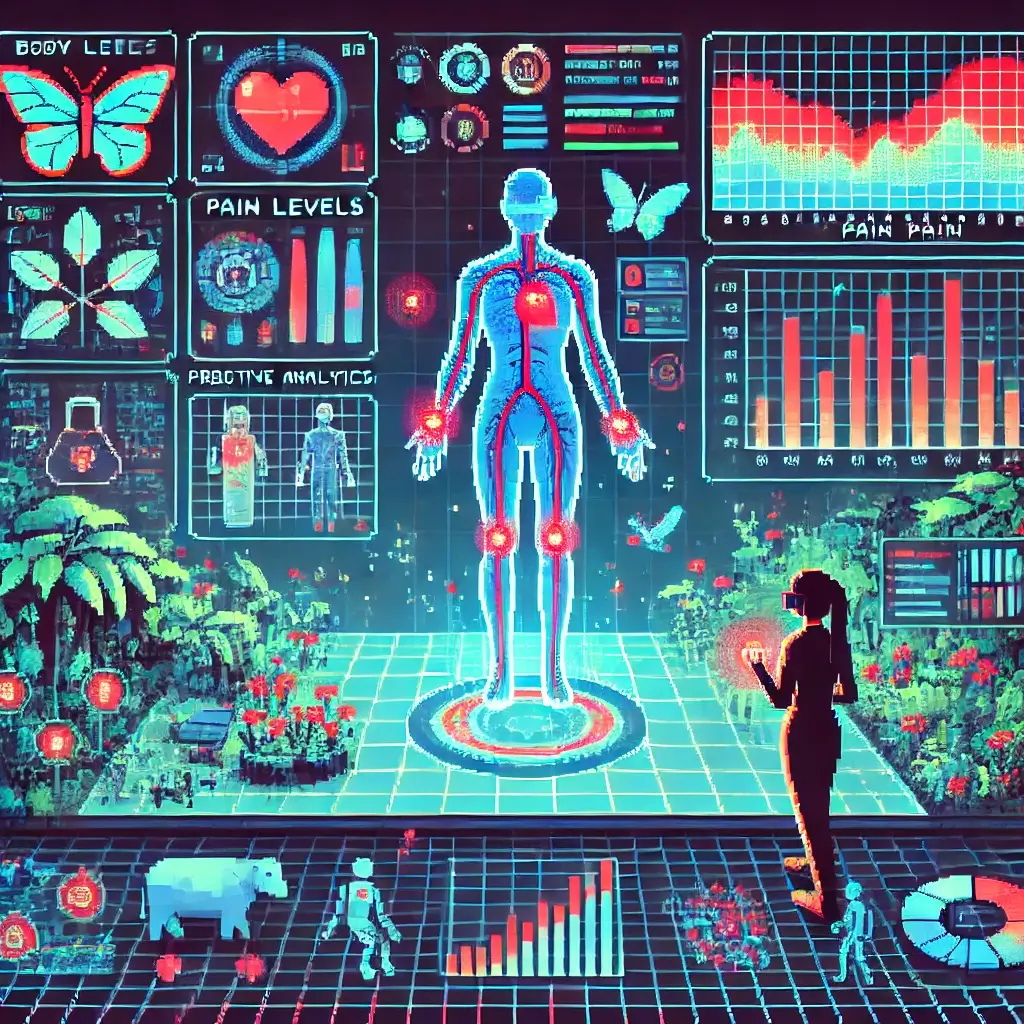
3 Shocking AI-Driven Solutions for Chronic Pain Management That Will Change Everything!
We’ve all been there, right? That nagging ache, that sharp jolt, that constant, soul-crushing pain that just won’t quit.
Maybe it’s a bad back from years of office work, or perhaps it’s the lingering phantom pain of an old sports injury.
Whatever the cause, chronic pain isn’t just a physical sensation; it’s a thief.
It steals your sleep, your joy, your ability to live a full, vibrant life.
For so long, the battle against chronic pain has felt like a rigged game.
We’ve tried everything—pills that leave you foggy, therapies that only provide temporary relief, and countless doctor visits that leave you feeling more like a file number than a person.
But what if I told you there’s a new player in town?
A game-changer so powerful, so personalized, it’s like having a team of experts dedicated solely to you?
Enter the world of AI-driven solutions for managing chronic pain.
I know, I know—AI, algorithms, data. It sounds cold, impersonal, and maybe a little scary.
But trust me, this isn’t about robots taking over.
It’s about harnessing the power of technology to finally get a handle on something that has felt utterly uncontrollable.
We’re talking about a future where your pain isn’t just a symptom to be treated, but a complex puzzle to be solved, piece by piece, with incredible precision.
So, buckle up. We’re about to dive deep into three mind-blowing AI-driven solutions that are not just on the horizon—they’re here, and they’re already changing lives.
This isn’t your grandma’s pain management plan; this is the future, and it’s already here.
Let’s get into it.
Table of Contents
Revolutionizing Personalized Pain Relief: How AI is a Game-Changer
Think about the last time you saw a doctor for your chronic pain.
What did they do?
They probably asked you to rate your pain on a scale of 1 to 10.
They might have prescribed a medication based on what has worked for other patients with similar symptoms.
This approach, while well-intentioned, is often a shot in the dark.
Pain is deeply personal, and a one-size-fits-all approach is a recipe for frustration and, often, failure.
I’ve been there myself, cycling through different treatments, each one promising a miracle, only to be left feeling defeated.
This is where AI swoops in like a superhero.
It’s not just about crunching numbers; it’s about creating a hyper-personalized profile of your pain.
Imagine if a system could analyze your genetic makeup, lifestyle, past medical records, and even your daily movement patterns to pinpoint the exact source of your pain.
It’s like moving from a generic map to a GPS that knows your exact destination and the best route to get there, accounting for all the traffic and roadblocks along the way.
AI doesn’t get tired, it doesn’t have biases, and it can process a mind-boggling amount of data in seconds.
This means it can identify patterns and connections that a human doctor, no matter how brilliant, might miss.
It can predict flare-ups before they happen, suggest lifestyle adjustments that are proven to work for people just like you, and even recommend a precise dosage of medication based on your unique metabolic profile.
We’re talking about a paradigm shift—from reactive care to proactive, predictive, and truly personalized health management.
This is the foundation upon which all the incredible AI-driven solutions are built.
It’s about moving from “What hurts?” to “Why does it hurt, and what’s the most effective way to make it stop, specifically for you?”
This is not science fiction; this is happening right now, and it’s giving millions of people a real fighting chance against chronic pain.
The first solution we’re going to talk about is all about using this data-driven approach to get ahead of the pain game.
The First Solution: AI-Powered Predictive Analytics for Chronic Pain
Let’s start with a scenario.
You wake up feeling great—a rarity, I know.
You go about your day, feeling hopeful.
But by the evening, that familiar, unwelcome ache starts to creep in.
By bedtime, you’re in full-blown flare-up mode, and you’re frustrated because you have no idea what you did to cause it.
This is the frustrating reality for many of us.
Our pain feels random, unpredictable, and entirely out of our control.
But what if it isn’t?
What if there’s a subtle, underlying pattern that your brain, and your doctor, are just not equipped to see?
This is the magic of AI-powered predictive analytics.
Think of it as a super-smart detective for your body.
It collects a massive amount of data from various sources: your sleep tracker, your fitness watch, your digital pain journal, and even environmental data like barometric pressure.
It then sifts through this ocean of information, looking for correlations that a human eye would never catch.
For example, it might notice that your pain levels consistently spike on days when your sleep quality dips below a certain threshold.
Or maybe it finds that a specific type of exercise, even if it feels good at the moment, is a precursor to a flare-up a day later.
This is the kind of insight that gives you back control.
You’re no longer just reacting to pain; you’re anticipating it and preventing it.
It’s like getting a weather forecast for your body, but with a 100% accuracy rate.
This isn’t just about identifying triggers, either.
It’s about optimizing your entire lifestyle.
The AI can suggest, “Based on your data, a 20-minute walk this morning will reduce your likelihood of a flare-up tonight by 30%.”
Or, “Your pain score increases by 15% on days you don’t hit your hydration goal. Let’s send you a reminder to drink water.”
This technology is already being used in several innovative ways.
Companies are developing apps that integrate with wearables and health records to provide these personalized insights.
For instance, one company called Kaia Health uses AI to provide digital therapeutic solutions for musculoskeletal pain.
Their AI analyzes patient movements and provides real-time feedback, making at-home physical therapy more effective.
Another fascinating example is the work being done at places like Stanford University, where researchers are using machine learning to predict chronic low back pain outcomes based on a wide range of patient data.
This isn’t just theory—it’s practical, actionable information that empowers you to make better choices for your body.
By understanding your unique pain puzzle, you can finally stop chasing symptoms and start addressing the root causes.
It’s a powerful, liberating feeling, and it’s only the beginning.
—
Ready to explore these solutions for yourself? Here are some fantastic resources:
Explore AI Research at Stanford
Check out Digital Pain Management Solutions
—
The Second Solution: Virtual Reality (VR) and AI-Driven Biofeedback
Picture this: you’re in the middle of a flare-up.
The pain is a roaring fire, and your mind is screaming, “Make it stop!”
Your instinct is to curl up and wait for it to pass, but that only reinforces the cycle of pain.
Now, imagine a different scenario.
You put on a sleek VR headset.
Suddenly, you’re not in your living room anymore.
You’re floating in a calm, beautiful ocean, or walking through a peaceful, sun-drenched forest.
The pain, which was just a moment ago all-consuming, begins to recede into the background.
This isn’t just a fancy distraction; it’s a clinically proven AI-driven solution.
Virtual reality, combined with AI, is creating powerful new ways to manage and even reduce chronic pain.
How does it work?
First, there’s the **power of distraction**.
Our brains have a limited capacity for attention.
By immersing you in a compelling, multisensory environment, VR hijacks your brain’s focus, pulling your attention away from the pain signals.
It’s like turning down the volume on a blaring alarm.
But the real magic happens when you add AI to the mix through **biofeedback**.
Biofeedback is the process of learning to control your body’s functions, like heart rate and muscle tension, using feedback from sensors.
In a traditional setting, this might involve a therapist and a lot of wires.
With AI and VR, it becomes a seamless, interactive experience.
The AI-powered VR system can measure your heart rate, skin temperature, and even your breathing patterns in real-time.
As you interact with the virtual world, the AI adjusts the experience based on your physiological responses.
For example, if the AI detects that your heart rate is elevated and your breathing is shallow (signs of stress and increased pain), it might change the virtual scene to be more calming.
Maybe the colors become softer, the sounds become gentler, or the pace of the virtual world slows down.
This creates a feedback loop: as the virtual environment helps you relax, your body responds by reducing its pain signals, and the AI reinforces this positive change.
It’s like having a personal guide in the virtual world, gently nudging you toward a state of calm and relaxation.
This approach is particularly effective for conditions like fibromyalgia, neuropathic pain, and phantom limb pain.
Companies like AppliedVR have developed FDA-approved VR therapeutics specifically for chronic pain management.
Their programs combine therapeutic techniques with immersive experiences, helping patients build new coping skills and reduce pain intensity over time.
Imagine a future where a VR headset is as common a part of a pain management plan as a physical therapy appointment.
This isn’t just about escaping pain; it’s about retraining your brain and body to respond differently to it.
It’s a powerful, non-pharmacological tool that’s giving people back a sense of agency and control over their lives.
The Third Solution: AI-Enhanced Wearable Technology
Remember that trusty old fitness tracker you have on your wrist?
It tells you how many steps you’ve taken and maybe how many calories you’ve burned.
That’s great for fitness, but for someone living with chronic pain, it’s not enough.
What if that same device, or something even smarter, could be a constant companion in your battle against pain?
This is the third game-changing AI-driven solution: enhanced wearable technology.
These aren’t your average step counters.
We’re talking about next-generation devices—smart patches, sophisticated smartwatches, and even smart clothing—that are designed to do more than just track data.
They are designed to actively manage your pain.
Let’s look at a few examples.
First, there are **AI-powered bio-patches**.
These small, discreet patches can be worn on the skin and are packed with sensors.
They don’t just monitor your heart rate; they can track things like muscle contractions, changes in skin conductivity, and even the subtle tremors associated with certain pain conditions.
The AI in the patch analyzes this data in real-time, looking for the early signs of a pain flare-up.
When it detects a potential problem, it can deliver a localized therapeutic response.
This could be a gentle electrical pulse to stimulate nerves (like a mini TENS unit) or a low-level heat application to relax tense muscles.
It’s like having a tiny, proactive physical therapist on your body, ready to intervene at the first sign of trouble.
Then there are **smart wearables that optimize your movement**.
For many chronic pain sufferers, poor posture or inefficient movement patterns can be a major cause of pain.
AI-enhanced smart clothing or wearable sensors can analyze your gait and posture as you go about your day.
They can detect when you’re slouching or moving in a way that puts undue stress on your joints.
The system can then provide gentle, haptic feedback—a slight vibration on your back, for instance—to remind you to correct your posture.
It’s a continuous, real-time coaching system that helps you build better habits without having to think about them constantly.
This is a perfect example of AI working as a silent partner, helping you improve your body’s mechanics and reduce the likelihood of pain.
Companies are also developing **neuro-modulation devices** that use AI to deliver precise electrical signals to nerves, effectively “scrambling” the pain signals before they reach your brain.
The AI learns your unique neural patterns and adapts the stimulation to provide the most effective relief.
The beauty of these wearable devices is their **continuous and non-invasive nature**.
They provide a constant stream of data that fuels the predictive analytics we discussed earlier, creating a holistic, self-improving system for your pain management.
It’s a world where your technology isn’t just a tool—it’s a partner in your health, working tirelessly to help you feel better.
The future of managing chronic pain is literally at your fingertips, and on your body.
Putting it All Together: The Future of AI-Driven Chronic Pain Management
So, we’ve talked about three powerful, standalone AI-driven solutions: predictive analytics, VR biofeedback, and enhanced wearables.
Now, imagine what happens when you combine all three.
This is where the future of chronic pain management gets really exciting, and where the hope for a pain-free life becomes a tangible reality.
Picture this integrated system in action.
Your **smart wearable** is constantly collecting data on your movement, posture, and vital signs.
This information is fed into an **AI-powered predictive analytics engine**.
The engine processes this data and, based on your historical patterns, sends you a notification:
“Your activity level today suggests a high probability of a flare-up tonight.
We recommend a 15-minute biofeedback session to prevent it.”
You then slip on your **VR headset**.
The AI-driven biofeedback program starts.
As you navigate a serene virtual landscape, the AI monitors your body’s relaxation response.
It adjusts the environment in real-time, helping you to lower your heart rate and ease muscle tension.
After the session, the AI logs the positive changes in your physiological data and adds them to your long-term health profile.
This cycle—data collection, analysis, intervention, and feedback—creates a virtuous loop of continuous improvement.
Your pain management plan isn’t static; it’s a living, breathing, learning system that gets better and more effective with every passing day.
This integrated approach is the ultimate form of personalized medicine.
It removes the guesswork and provides a clear, data-backed path to relief.
And here’s the best part: it’s not meant to replace your doctor.
It’s meant to empower them.
Imagine showing up to your next appointment with a detailed report generated by the AI system.
It shows your pain trends, identified triggers, and the effectiveness of different interventions.
Your doctor can then use this information to make incredibly informed decisions, fine-tuning your treatment plan with a level of precision that was previously impossible.
We are moving beyond the era of simply treating symptoms.
We are entering an age of understanding, predicting, and preventing chronic pain from ever taking hold in the first place.
It’s an exciting, hopeful future, and it’s built on the incredible power of AI.
AI-Driven Solutions: Your Questions Answered
I know what you’re thinking. This all sounds amazing, but what’s the catch?
Let’s tackle some of the most common questions and concerns I hear about using AI for chronic pain.
Is this expensive?
Like any new technology, the initial cost can be a barrier.
However, many of these solutions are being developed with accessibility in mind.
Digital therapeutic apps and basic wearables are often more affordable than long-term, intensive medical treatments.
And as the technology becomes more widespread, the costs will continue to decrease.
Plus, many insurance providers are starting to recognize the long-term cost-effectiveness of these preventative and therapeutic tools.
Is my data safe?
This is a critical question.
Reputable companies developing these AI-driven solutions are bound by strict privacy regulations, such as HIPAA in the United States.
They use advanced encryption and data security measures to ensure your personal health information remains confidential.
It’s always a good idea to do your research on any product or app you plan to use and read their privacy policy carefully.
Is it as effective as talking to a real doctor?
This is a great point, and it’s important to understand that AI is a tool, not a replacement.
The goal of these AI-driven solutions is to augment and enhance the care you receive from your healthcare provider, not to replace it.
The human touch, empathy, and clinical judgment of a doctor are irreplaceable.
However, AI can provide your doctor with a wealth of objective, real-time data that they would never have otherwise, leading to more informed and effective treatment plans.
What about the “human” aspect of pain? Can AI really understand that?
This is a common and very valid concern.
AI doesn’t “feel” your pain in the way a human can.
It’s not going to give you a hug or listen to your frustrations with the same kind of empathy as a friend or family member.
But what AI can do is provide a level of objective, data-driven understanding that can be profoundly validating.
It can show you, in black and white, that your pain isn’t “all in your head.”
It can prove to your doctor, with hard data, that certain activities are making you worse, or that certain therapies are helping.
This can lead to a deeper, more trusting relationship with your healthcare team, which is a huge part of the healing process.
AI for chronic pain isn’t about removing humanity from healthcare; it’s about giving us the tools to be more effective and empathetic caregivers, and more empowered patients.
Conclusion: A New Hope for Chronic Pain Sufferers
I know this all sounds a little like something out of a futuristic movie, but trust me, it’s not.
The AI-driven solutions we’ve talked about—predictive analytics, VR biofeedback, and AI-enhanced wearables—are real, and they are already changing the lives of people just like you and me.
For so long, living with chronic pain has felt like fighting a losing battle against an invisible enemy.
We’ve been limited by our own bodies, by the limitations of our medical system, and by the sheer unpredictability of it all.
But for the first time, we have a powerful ally.
We have a partner that can help us see the unseen, predict the unpredictable, and take back control of our lives.
This isn’t about a quick fix or a magic bullet.
It’s about a fundamental shift in how we approach pain—from a passive, reactive stance to an active, proactive one.
It’s about moving from a world where we just have to live with the pain to a world where we can actively manage, mitigate, and even prevent it.
The hope that these AI-driven solutions provide is more than just a technological promise.
It’s the promise of more good days, more restful nights, and more moments of joy that aren’t overshadowed by pain.
It’s the promise of getting back to doing the things you love, whether it’s playing with your kids, hiking a trail, or just enjoying a quiet cup of coffee without a nagging ache.
The future of chronic pain management is bright, and it’s powered by the most incredible innovation of our time.
So, take a deep breath. The help you’ve been waiting for might just be a click away.
Chronic Pain, AI-Driven Solutions, Personalized Care, Predictive Analytics, Wearable Technology