
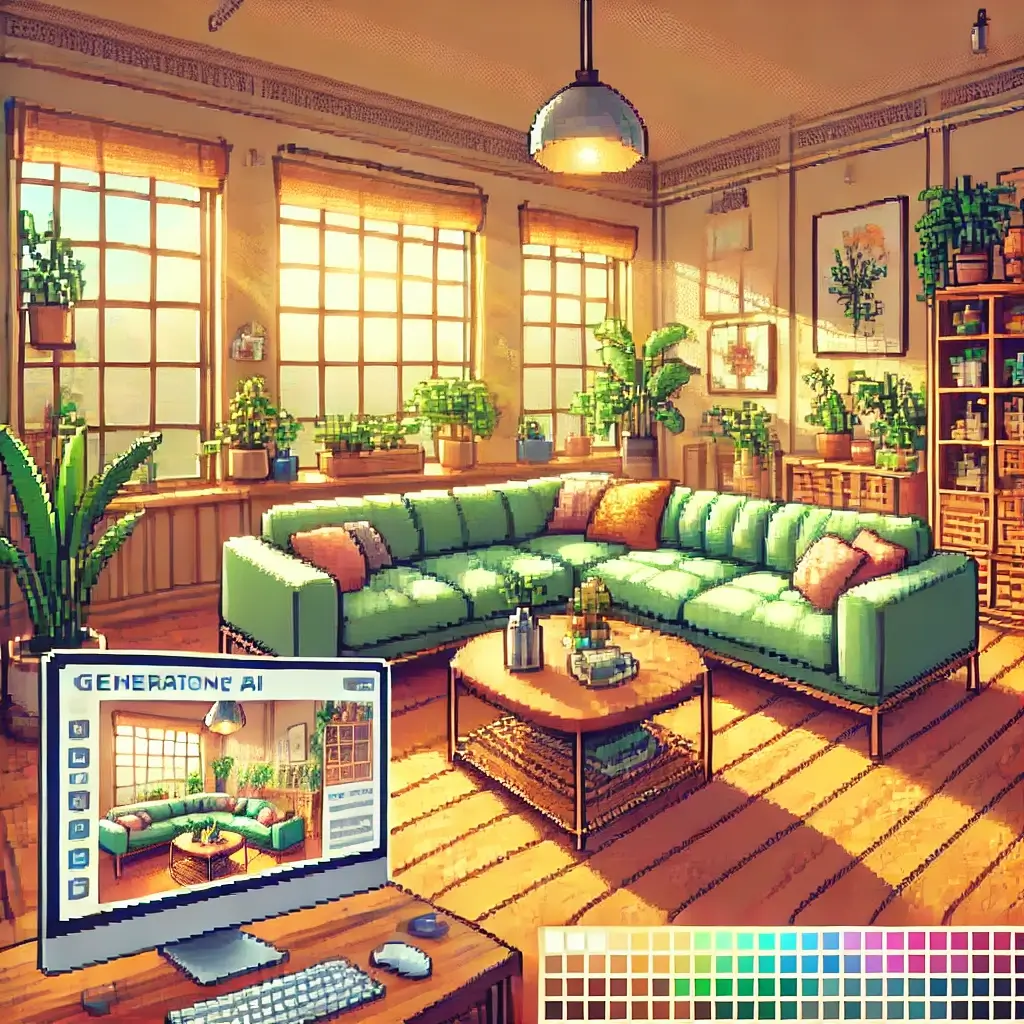
1 Generative AI Secret That Will Change Your Interior Design Forever!
Hey, everyone!
Ever feel like you’re stuck in an endless loop of Pinterest boards and design blogs, but you just can’t quite picture what your space could look like?
I get it.
It’s like trying to bake a cake from scratch with a million different recipes, but you don’t even know what flavor you want.
Well, what if I told you there’s a new ingredient in the design world that can solve this exact problem?
It’s a game-changer, and it’s called generative AI.
Forget what you think you know about AI—this isn’t some robot taking over your job.
This is a creative partner, a limitless brainstorming buddy, and a personal design consultant all rolled into one.
It’s about making your design journey not just easier, but a whole lot more fun and personal.
So, get ready to ditch the design paralysis and dive into a world where your wildest home decor dreams can come to life with a few simple clicks.
Let’s get started on how this one secret can completely transform your approach to interior design.
Table of Contents
What Exactly is Generative AI for Interior Design? A Beginner’s Guide
Okay, let’s cut through the tech jargon.
Generative AI, in a nutshell, is a type of artificial intelligence that can create new content.
Instead of just analyzing data or following a pre-set rule, it can actually generate new images, texts, or even 3D models from scratch.
Think of it like this: traditional design software is like a fancy toolbox.
You have to know which tool to use and how to use it to build something specific.
Generative AI, on the other hand, is like giving that toolbox to a brilliant, tireless apprentice who has studied every design style and trend on the planet.
You give it a simple prompt—like “a cozy living room with a vintage modern feel, lots of natural light, and a touch of green”—and boom, it shows you what that could look like.
It’s not just pulling a picture from Google Images; it’s literally creating a brand new, never-before-seen visual based on your description.
This is a fundamental shift, and it’s why it’s so powerful.
This technology is built on massive datasets of images and text, which is how it “learns” what a “vintage modern” living room is supposed to look like.
The AI understands the relationships between objects, colors, and textures.
It knows that a cozy space often includes soft textiles and warm lighting, and that vintage modern pairs sleek lines with classic, worn-in pieces.
It can take all those concepts and synthesize them into a coherent and beautiful image that perfectly matches your vision.
I remember when I first tried it, I was skeptical.
I thought it would produce something clunky and unnatural, like a bad photoshop job.
But the results were so surprisingly good, so intuitive, that I was immediately a believer.
This is the future, folks, and it’s not a scary future; it’s an exciting one filled with endless creative possibilities.
And the best part?
You don’t need a degree in computer science or design to use it.
You just need an idea.
This is about democratizing design, making it accessible to everyone, regardless of their skill level or budget.
The barriers to entry have been completely obliterated, and that’s something to get excited about.
So, if you’re ready to start exploring, let’s talk about the biggest hurdle this technology helps you overcome.
The Death of Design Paralysis: How Generative AI Frees Your Creativity
We’ve all been there.
You’re staring at a blank wall or an empty room, and your mind is just… blank.
You have a vague idea of what you want, but you can’t seem to make a single decision.
Should the couch be gray or beige? Do I go with a gallery wall or a single large piece of art? Will a round coffee table work in this square room?
This is what I call design paralysis, and it’s a real creativity killer.
It stems from the fear of making a bad decision and the sheer overwhelming number of options available today.
Generative AI is the antidote to this.
It allows you to visualize possibilities instantly.
Instead of just imagining a room with a different couch, you can see it in seconds.
You can try out a dozen different color palettes, furniture arrangements, and lighting schemes without moving a single piece of furniture or spending a single dollar.
It’s like having a superpower that lets you see into the future of your home.
This instant feedback loop is what makes generative AI so incredibly effective.
It’s no longer a guessing game.
You can experiment with wild ideas that you might have been too afraid to try in real life.
Ever wondered what your living room would look like with a bold, maximalist style, even though you’re a minimalist at heart?
Now you can find out in seconds, without any commitment.
This process of rapid iteration and exploration is how you truly discover your unique style.
The AI presents you with a starting point, a new idea, and then you can refine it, add your personal flair, and make it your own.
It turns the stressful process of design into a playful, collaborative session.
Instead of being a solitary, agonizing task, it becomes a conversation between you and this incredible technology.
This is why professionals are also starting to embrace it.
It’s not about replacing them, but about giving them a powerful tool to communicate ideas to clients more effectively and to explore new concepts in a fraction of the time.
It speeds up the initial phase, allowing everyone to focus on the fine details that truly make a space special.
If you’re still on the fence, just think about all the time you’ve spent scrolling aimlessly.
Imagine transforming that passive scrolling into active, creative visualization.
That’s the power of this technology.
The Magic Behind the Curtain: A Simple Explanation of How AI Designs
So, how does this thing actually work?
You might be picturing a supercomputer from a sci-fi movie, but the reality is more accessible and, frankly, a little more magical.
At its core, generative AI uses something called a neural network.
Imagine a massive, digital brain that has been shown millions upon millions of images of interiors.
It’s seen everything: minimalist Scandinavian apartments, opulent French chateaus, cozy rustic cabins, and everything in between.
As it processes all these images, it starts to understand the underlying patterns and principles of design.
It learns that a “modern” style often includes clean lines and a limited color palette, while “bohemian” is characterized by layered textures, vibrant colors, and eclectic decor.
When you give it a prompt like “create a modern bohemian living room,” it doesn’t just pull up a picture with those keywords.
Instead, it uses its “understanding” of those styles to generate a completely new image that combines the best elements of both.
It’s like a painter who has studied all the masters and can now create a brand-new masterpiece in the style of their choice.
The key here is that it’s generative.
It’s not just a search engine; it’s a creative engine.
It can fill in the gaps and create something new, something that didn’t exist before you typed in your prompt.
This is also why your prompts are so important.
The more specific and descriptive you are, the better the AI can understand your vision and create a more accurate and stunning result.
Instead of “living room,” you could say “a cozy, sun-drenched living room with a mid-century modern aesthetic and a large sectional sofa in sage green.”
See the difference?
It gives the AI more to work with, resulting in a more personalized and spectacular outcome.
It’s the digital equivalent of sketching out an idea on a napkin, but instead of a crude drawing, you get a photorealistic rendering.
This technology is rapidly evolving, and what’s possible today will be even more mind-blowing tomorrow.
It’s a truly exciting time to be interested in design.
Your Personal Design Lab: 5 Practical Ways to Use AI Right Now
Now for the good stuff!
This isn’t just theory; this is something you can start using today.
Here are five incredibly practical ways to use generative AI for your next interior design project.
1. Instant Mood Boards and Concepting:
Before, creating a mood board involved collecting physical swatches, tearing out magazine pages, and spending hours on Pinterest.
Now, you can simply type in a few keywords—”coastal grandmother aesthetic, blue and white color palette, linen textures”—and the AI will generate a beautiful concept image for you.
It’s the fastest way to get your creative juices flowing and to see if an idea you have in your head actually works in a visual format.
2. Re-Imagining Your Existing Space:
This is probably the most powerful and useful application for homeowners.
You can upload a photo of your current room—that old, boring living room you’re sick of—and the AI can completely re-imagine it.
You can prompt it to “modernize this room” or “give this living room a vibrant, eclectic feel” and watch it transform the space right before your eyes.
It’s like having a virtual renovation without the dust and the expense.
3. Experimenting with Layouts and Furniture Placement:
Worried that a large bookshelf will make your small living room feel cramped?
Now you can see exactly what it would look like.
Many AI tools allow you to create 3D floor plans and virtually place furniture, which helps you make informed decisions about spatial planning.
This is crucial for maximizing functionality and flow in your home.
4. Curating the Perfect Color Palette:
Choosing paint colors is notoriously difficult, and a wrong choice can be an expensive mistake.
With generative AI, you can see how different colors will look on your walls with photorealistic accuracy.
You can try out everything from bold jewel tones to soft pastels and see how they interact with your existing furniture and natural light.
No more buying a dozen paint samples and patching up your walls!
5. Exploring Unique and Custom Elements:
Ever had a crazy idea for a custom piece of furniture or a unique wall feature but couldn’t explain it to a designer or carpenter?
Generative AI can help.
You can describe your idea—”a bookshelf shaped like a tree with built-in reading nooks”—and the AI can generate a visual of it, giving you a clear blueprint to work with.
This opens up a world of possibilities for truly personalized and one-of-a-kind spaces.
This is the future of design, and it’s right at your fingertips.
It’s not about replacing human creativity, but about augmenting it and giving you the tools to be your own best designer.
More Than Just Pretty Pictures: The Real-World Impact of Generative AI
Generative AI is doing more than just helping you pick a paint color.
It’s a powerful force that is actively shaping the entire design industry, from professionals to everyday homeowners.
For designers, it’s a tool that’s supercharging their workflow.
They can create initial concepts and present them to clients in a fraction of the time it used to take.
This frees them up to focus on the more nuanced, human-centric parts of the job, like sourcing unique materials, building relationships, and ensuring a space truly reflects the client’s personality.
For homeowners, it means having unprecedented access to high-quality design ideas without the hefty price tag of a professional.
It’s an incredible leveler, making good design accessible to a much broader audience.
This is where the real beauty lies—it’s not about perfection, but about empowerment.
It gives you the confidence to tackle a big project because you’ve already seen the potential outcome.
It’s no longer a leap of faith; it’s a calculated, visual decision.
The impact is being felt across the industry, and it’s something that is being discussed at the highest levels of design and architecture.
For a deeper dive into how architects and designers are thinking about this shift, I highly recommend checking out these articles from some of the most respected voices in the field.
They offer incredible insights into the professional side of things and show that this isn’t just a fleeting trend; it’s a fundamental change.
These resources will give you a well-rounded view of how this technology is being embraced by the pros.
Read an Architect’s Perspective on AI See How AI is Changing New Construction Get a DIY Mom’s Take on AI Design
I can’t stress enough how important it is to keep learning and stay curious about this technology.
It’s not a static tool; it’s constantly evolving, and by keeping up with it, you can stay ahead of the curve and make the most of its incredible potential.
The Human Touch: When to Call in the Pros (and How AI Helps)
Now, I know some of you might be thinking, “This all sounds great, but what about the human element?”
That’s a fair question, and it’s a conversation that the design world is having right now.
The truth is, generative AI is a tool, not a replacement for human creativity and expertise.
It can create a beautiful image, but it can’t build the emotional connection to a space that a human designer can.
A good designer understands your lifestyle, your family’s needs, your personality quirks, and the little details that make a house a home.
They can tell you why a certain material might not be practical for your lifestyle or how to create a flow that just feels right.
AI can give you the blueprint, but a human designer adds the soul.
So, when should you still consider bringing in a professional?
If you’re tackling a major renovation with structural changes, electrical work, or plumbing, a professional is non-negotiable.
AI can’t tell you if a wall is load-bearing or if your local code requires a certain type of wiring.
Similarly, for a truly bespoke, high-end project where you’re sourcing custom-made pieces and working with unique artisans, a professional designer is invaluable.
But here’s the cool part: AI makes working with a designer better.
Instead of struggling to articulate your vision, you can show them a few AI-generated images that perfectly capture the mood, style, and feel you’re going for.
It eliminates the guessing game and gives the designer a clear starting point, saving you both time and money.
It’s a collaborative tool, a bridge between your ideas and their expertise.
So, don’t think of it as a battle between humans and machines.
Think of it as a powerful partnership that’s creating better, more personalized spaces than ever before.
Getting Started: Your Generative AI Design Toolkit
Ready to try it out?
You don’t need to download a complicated software or have a powerful computer.
Many of the best tools are available right in your web browser or as a simple app.
There are many options available, from free tools that offer basic functionality to more robust paid platforms with advanced features like 3D rendering and virtual reality walkthroughs.
To get started, I recommend looking for a tool that’s user-friendly and focuses on image generation from text prompts.
Some of these platforms even allow you to upload a photo of your own room and then edit it with an AI prompt, which is a great way to dip your toes into the water.
The key to success is to experiment.
Start with simple prompts and then get more detailed.
Play with different keywords, colors, styles, and furniture types.
You’ll quickly get a feel for how the AI “thinks” and what kinds of prompts yield the best results.
Don’t be afraid to try something completely wild and out of your comfort zone.
Remember, this is your personal design lab, and there are no bad ideas.
The only mistake you can make is not trying at all.
In a world where everyone wants a home that feels uniquely them, generative AI is the most powerful tool you have to find your voice and bring your vision to life.
I hope this post has inspired you to give it a shot and see what’s possible.
The future of design is here, and it’s beautiful.
Generative AI, Interior Design, Home Decor, AI Tools, Design Concepts