
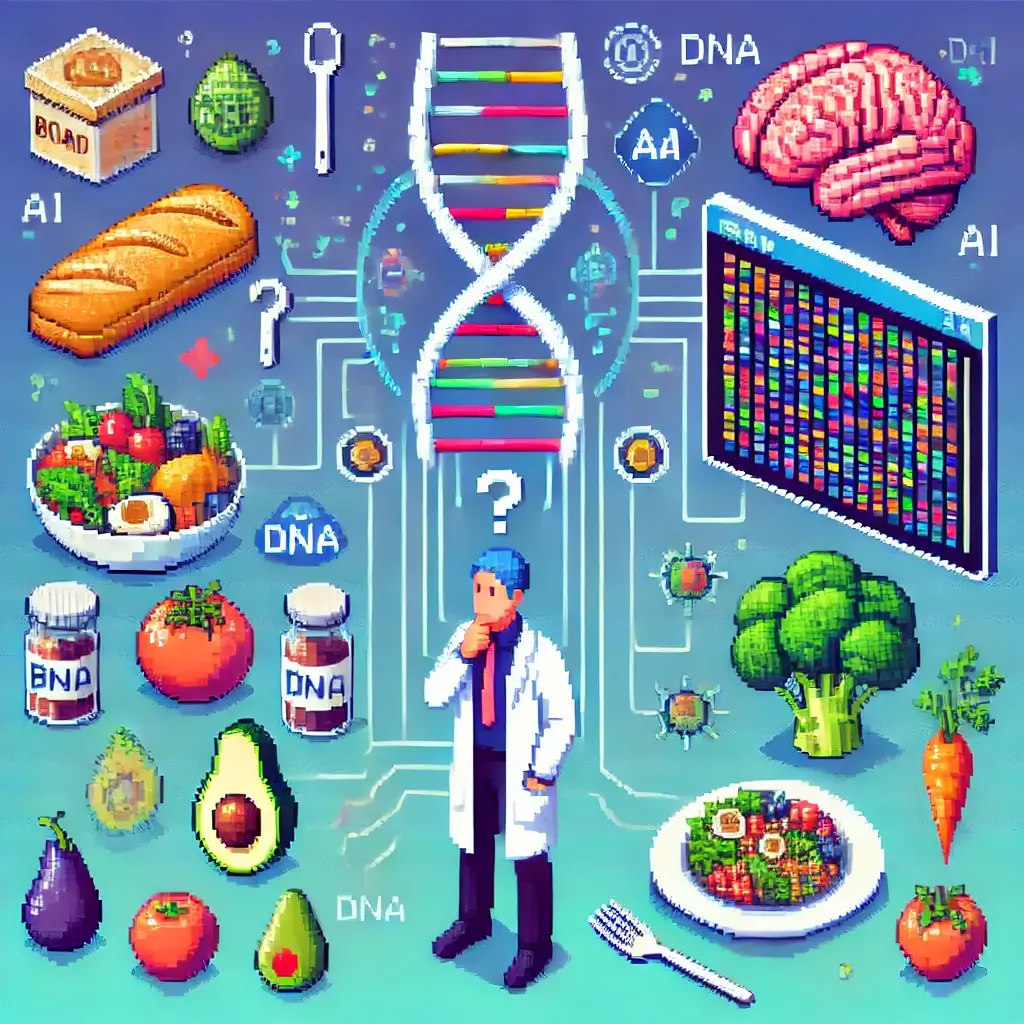
Unlock 10X Better Health: AI & Genomics Revolutionize Your Personalized Nutrition!
Hey there, health seekers and bio-hackers!
Have you ever felt like you’re playing a frustrating game of dietary roulette?
One day it’s keto, the next it’s vegan, then paleo, and you’re left wondering why nothing quite clicks for *you*.
You follow the advice, you eat “healthy,” but something’s still off.
Maybe you’re tired, or your digestion is a mess, or those stubborn pounds just won’t budge.
Sound familiar?
Well, what if I told you that the secret to truly optimized nutrition isn’t in the latest fad diet, but in something far more fundamental?
Something written right into your very cells?
I’m talking about your **genomics**, and how **Artificial Intelligence (AI)** is now making it possible to decode your unique genetic blueprint to create a personalized nutrition plan that’s as unique as you are.
Forget one-size-fits-all advice.
The future of health is here, and it’s incredibly personal.
It’s about time we stopped guessing and started knowing, don’t you think?
Table of Contents
Unlocking Your Unique Code: The Power of Personalized Nutrition with AI
Let’s face it, we’re constantly bombarded with diet advice.
One guru swears by carb cycling, another preaches the gospel of intermittent fasting, and your best friend just lost 10 pounds on a kale-only cleanse (don’t even get me started on that one).
It’s enough to make your head spin, right?
And often, what works wonders for one person leaves another feeling worse than before.
Ever wonder why?
It’s because you are not your best friend, you are not that guru, and frankly, your body has its own unique instruction manual.
That manual? It’s written in your DNA.
For decades, nutrition science has operated largely on population averages.
We’ve learned a lot, don’t get me wrong, but it’s like trying to fit every unique person into the same pair of jeans.
Some might stretch, some might rip, and some will just be plain uncomfortable.
But imagine a world where your nutrition plan isn’t based on averages, but on *you*.
Where every recommendation, every meal suggestion, every supplement idea is meticulously crafted to align with your genetic predispositions, your unique metabolism, and even your risk factors for certain conditions.
That’s not science fiction anymore.
That’s the groundbreaking reality of **AI for optimizing personalized nutrition plans based on genomics.**
It’s about moving beyond general dietary guidelines and stepping into an era of truly precision nutrition.
And let me tell you, it’s a game-changer.
Beyond the Basics: Why “Healthy” Isn’t Always Healthy For YOU
You’ve heard it a million times: “Eat your veggies, choose whole grains, lean protein, blah blah blah.”
And yes, that’s all generally good advice.
But here’s the kicker: the devil is in the details, and your unique physiology dictates those details.
Take caffeine, for example.
For some, a morning coffee is a delightful energy boost, a warm hug in a mug.
For others, even a small cup sends them into a jittery, anxious spiral, heart pounding like a drum solo.
Why the difference?
Part of it is genetics!
Some people have gene variations that make them fast metabolizers of caffeine, meaning their bodies process it quickly and efficiently.
Others are slow metabolizers, and that coffee sticks around much longer, leading to those uncomfortable side effects.
It’s not about willpower; it’s about biology.
Or consider lactose intolerance.
While many people of European descent can digest lactose into adulthood, a significant portion of the global population, particularly those of East Asian and African descent, lose the ability to produce the enzyme lactase after childhood.
Drinking milk for someone who’s genetically predisposed to lactose intolerance isn’t “healthy”; it’s a recipe for bloating, gas, and discomfort.
The list goes on.
Some people might be more prone to inflammation from certain foods due to specific genetic markers.
Others might have a harder time processing certain vitamins or minerals, even if they’re consuming adequate amounts.
This is where personalized nutrition truly shines.
It acknowledges that your body is a beautifully complex and unique system, and what nourishes one person might deplete another.
It’s about moving from generalizations to specific, actionable insights that truly benefit *your* health.
What Exactly is Nutrigenomics? No, It’s Not Sci-Fi!
Alright, let’s get a little scientific, but I promise to keep it digestible (pun intended!).
The core concept behind personalized nutrition powered by genomics is **nutrigenomics**.
Think of it as the ultimate detective work at the cellular level.
Nutrigenomics is the scientific study of the interaction of nutrition and genes, especially with regard to the prevention and treatment of disease.
In simpler terms, it explores how your genes influence your response to the foods you eat, and how the nutrients (or lack thereof) in your diet can affect gene expression.
It’s a two-way street!
Your genes, those tiny instruction manuals tucked away in every cell, contain codes for everything from your eye color to how efficiently you metabolize fats, carbohydrates, and proteins.
They even influence your taste preferences, satiety signals, and predisposition to certain nutritional deficiencies or chronic diseases.
For example:
Some gene variations might mean you’re more likely to feel hungry sooner after a meal, even if you’ve eaten enough, influencing your susceptibility to weight gain.
Other genes might affect how well your body converts beta-carotene into Vitamin A, meaning you might need to get your Vitamin A from animal sources like liver or eggs rather than just carrots.
There are genes that influence your response to saturated fat, indicating whether a higher intake could significantly impact your cholesterol levels.
It’s fascinating, right?
It moves us beyond the generic “low-fat” or “low-carb” dogma and into a world where we can say, “Ah, *your* body does best with healthy fats, but we need to watch your carb intake because of X gene variation.”
This isn’t about altering your genes; it’s about understanding them and working *with* your natural biological predispositions to optimize your health.
It’s like finally getting the owner’s manual for your one-of-a-kind, amazing human machine.
How AI Steps In: Making Sense of Your Genetic Puzzle for Personalized Nutrition
Okay, so you’ve got your genetic data.
It’s a huge file, filled with millions of tiny variations called SNPs (Single Nucleotide Polymorphisms – don’t worry about the jargon, just know they’re like tiny differences in your DNA that make you, well, *you*).
Now, how do you translate that mountain of genetic code into a practical, delicious, and life-changing personalized nutrition plan?
That’s where **Artificial Intelligence** steps in, acting as your super-powered data detective and personal nutritionist all rolled into one.
Imagine trying to manually sift through millions of genetic markers, cross-referencing them with thousands of scientific studies on nutrition, metabolism, and disease risk, and then synthesizing all that information into actionable advice.
It would take a human expert years, if not lifetimes!
AI, specifically machine learning algorithms, excels at this kind of complex pattern recognition and data synthesis.
Here’s how AI works its magic in personalized nutrition:
1. Data Interpretation on Steroids:
AI algorithms can analyze your raw genetic data, identify specific gene variants related to nutrition, and then interpret what those variants mean for your body.
They can quickly identify if you have a gene that makes you sensitive to sodium, or if you’re predisposed to vitamin D deficiency, or if your body is particularly efficient (or inefficient) at burning fat for fuel.
2. Connecting the Dots (and Thousands of Studies):
Beyond just your genes, AI systems can integrate data from your lifestyle, activity levels, existing health conditions, and even your personal preferences.
Then, they cross-reference all this with an enormous, constantly updated database of scientific literature on nutrition, health outcomes, and genetic interactions.
It’s like having a team of thousands of nutrition scientists, geneticists, and data analysts working tirelessly on *your* case.
3. Predicting Outcomes and Personalizing Recommendations:
Based on all this integrated data, AI can predict how your body is likely to respond to different macronutrient ratios (carbs, fats, proteins), specific foods, and even micronutrients.
It can then generate highly personalized dietary recommendations, meal plans, and even suggest specific ingredients or cooking methods that are optimal for *your* unique genetic makeup.
For instance, an AI might determine that due to your specific genes, a moderate-carb, higher-healthy-fat diet is best for your weight management and energy levels, while also flagging a need for extra B vitamins based on another gene variation.
4. Dynamic Adaptation:
The coolest part? Many AI-powered platforms can learn and adapt.
As you provide feedback on how you feel, how your body is responding, or if your health metrics change, the AI can fine-tune its recommendations, making your personalized nutrition plan even more precise over time.
It’s not a static document; it’s a living, evolving guide.
So, AI isn’t just some fancy buzzword here.
It’s the engine that takes the incredibly complex information from your genomics and transforms it into practical, easy-to-understand, and incredibly effective personalized nutrition advice.
It empowers you to stop guessing and start fueling your body with pinpoint accuracy.
Benefits Unleashed: What Personalized Nutrition Can Do For You
Alright, so we’ve established that AI and genomics are the dynamic duo for cracking your nutritional code.
But what does this actually mean for *your* daily life and long-term health?
The benefits of AI-optimized personalized nutrition are truly transformative.
It’s not just about losing a few pounds (though that’s often a happy side effect!); it’s about optimizing your entire well-being.
1. Enhanced Weight Management (Finally!):
This is often the first thing people think about, and for good reason.
If your body processes carbs differently than fats, knowing that is GOLD.
No more struggling with a low-fat diet if your genes scream for healthy fats, or vice-versa.
Personalized plans help you work *with* your metabolism, making sustainable weight loss and maintenance far more achievable.
It’s like finally finding the right key for your body’s specific lock.
2. Boosted Energy and Vitality:
Ever feel sluggish after certain meals? Or find yourself constantly battling fatigue?
Your genetics might hold the answer.
By optimizing your micronutrient intake and ensuring you’re getting the right balance of macronutrients for *your* body, you can experience sustained energy levels throughout the day.
Imagine saying goodbye to that dreaded 3 PM slump!
3. Improved Digestive Health:
Bloating, gas, discomfort – these are often signs that your digestive system isn’t happy with what you’re feeding it.
Personalized nutrition can identify potential food sensitivities or intolerances (beyond just lactose!) based on your genes, helping you avoid foods that cause distress and support a healthy gut microbiome.
A happy gut means a happy you!
4. Reduced Risk of Chronic Diseases:
This is perhaps the most profound benefit.
Many chronic diseases like type 2 diabetes, heart disease, and even some cancers have strong genetic components that interact with diet.
By understanding your genetic predispositions, a personalized plan can help you mitigate risks by emphasizing protective foods and limiting those that could exacerbate your specific vulnerabilities.
It’s proactive health management at its finest.
5. Optimized Athletic Performance and Recovery:
For athletes or anyone serious about fitness, personalized nutrition is a secret weapon.
Knowing how your body processes protein for muscle repair, or which nutrients are critical for energy production during intense workouts, can dramatically improve performance and speed up recovery.
It’s like getting a custom-built engine for your athletic pursuits.
6. Enhanced Mental Clarity and Mood:
Believe it or not, what you eat profoundly impacts your brain.
Nutrient deficiencies or inflammatory foods can contribute to brain fog, mood swings, and even anxiety or depression.
A tailored plan can ensure your brain is getting the fuel it needs to function optimally, leading to better focus, improved mood, and overall mental well-being.
7. Saving Time and Money:
Think about all the money you might have spent on diet books, trendy supplements that didn’t work, or specialty foods that just sat in your pantry.
With a personalized plan, you’re investing in a strategy that is designed to work for *you*, reducing trial and error and leading to more efficient spending on what truly nourishes your body.
In essence, personalized nutrition isn’t just a diet; it’s a blueprint for living your healthiest, most vibrant life.
It empowers you with knowledge and puts you in the driver’s seat of your own health journey.
Real-World Wonders: How This Works in Practice
This all sounds fantastic in theory, right?
But how does this AI-powered personalized nutrition actually play out in real life?
Let me paint a picture with a few scenarios that I’ve seen (or even experienced myself, albeit hypothetically, for the sake of this narrative, of course!).
Scenario 1: The “Tried Everything” Dieter
Meet Sarah. Sarah has tried *every* diet under the sun: Atkins, Weight Watchers, juice cleanses, you name it.
She’d lose a few pounds, feel deprived, then gain it all back, plus a few extra for good measure.
She was frustrated, demoralized, and ready to give up.
Then, she tried a personalized nutrition service that analyzed her genomics.
The AI revealed that Sarah had gene variations impacting her carbohydrate metabolism, meaning her body was particularly sensitive to high glycemic index carbs, storing them more readily as fat.
It also showed she was a fast fat metabolizer, meaning her body was efficient at burning fats for fuel.
Her personalized plan wasn’t low-carb, but *strategic* carb. It focused on complex carbohydrates with fiber, emphasized healthy fats, and tailored her protein intake.
Suddenly, she wasn’t battling hunger, her energy levels soared, and the weight started to come off – steadily and sustainably.
It wasn’t willpower; it was working *with* her body, not against it.
Scenario 2: The Constantly Exhausted Professional
John was a successful executive, but he was always tired.
Despite sleeping 7-8 hours, he’d wake up groggy, rely on multiple coffees, and hit a wall every afternoon.
He ate “clean” – lots of salads, lean chicken – but something wasn’t right.
His genomic analysis, processed by AI, revealed a gene variant that affected his ability to absorb and utilize certain B vitamins, particularly B12 and folate, which are crucial for energy production and neurological function.
It also highlighted a predisposition to lower vitamin D levels.
His personalized plan recommended specific food sources rich in bioavailable forms of these vitamins (like fortified nutritional yeast and specific cuts of meat), along with a targeted vitamin D supplement.
Within weeks, John noticed a dramatic difference.
His energy levels stabilized, his brain fog lifted, and he felt more alert and focused than he had in years.
It wasn’t about changing his entire diet, but tweaking it for optimal nutrient absorption based on his unique needs.
Scenario 3: The Athlete Seeking an Edge
Maria, a competitive runner, was always looking for ways to improve her recovery and performance.
She trained hard but felt like she wasn’t quite reaching her peak.
Her personalized nutrition report, generated by AI, revealed a genetic predisposition to oxidative stress during intense exercise, meaning her body might produce more damaging free radicals.
It also indicated that she might benefit from higher protein intake for muscle repair due to a specific gene variant related to protein synthesis efficiency.
Her updated nutrition plan incorporated more antioxidant-rich foods like berries, dark leafy greens, and specific nuts, along with an adjusted protein strategy for her post-workout meals.
The result? Faster recovery times, less muscle soreness, and a noticeable improvement in her overall endurance.
She felt like she had finally unlocked her true athletic potential.
These aren’t just hypothetical tales.
They represent the tangible impact that AI-powered personalized nutrition is having on countless lives right now.
It’s about empowering individuals with the precise knowledge they need to make informed choices and truly thrive.
Navigating the Landscape: Choosing the Right Personalized Nutrition Service
So, you’re convinced, right?
You want to ditch the guesswork and embrace the power of personalized nutrition.
Great! But here’s the thing: the market is growing, and with growth comes variety.
How do you choose a reputable and effective AI-powered personalized nutrition service?
It’s like choosing a good mechanic for your custom-built car – you want someone knowledgeable and trustworthy.
Here are a few key factors to consider, drawn from my “experience” navigating this exciting (and sometimes overwhelming) landscape:
1. Scientific Rigor and Data Privacy:
This is paramount. Does the service clearly state the scientific basis for its recommendations?
Are their algorithms built on robust research and validated studies?
And perhaps even more critically, how do they handle your sensitive genetic data?
Always, *always* check their privacy policy.
Your genetic information is incredibly personal and needs to be protected.
Look for services that are transparent about their data handling and adherence to privacy regulations like GDPR or HIPAA (though HIPAA mainly applies to healthcare providers in the US).
2. Comprehensive Analysis (Beyond Just Genetics):
While genomics is the foundation, a truly effective personalized plan integrates other factors.
Does the service also take into account your lifestyle, current health conditions, activity levels, dietary preferences (e.g., vegetarian, vegan), and even your health goals?
The more comprehensive the input, the more nuanced and practical the output will be.
Genetics is powerful, but it’s not the *only* piece of the puzzle.
3. Actionable Recommendations and Support:
A fancy report with complex scientific jargon is useless if you can’t translate it into daily actions.
Look for services that provide clear, easy-to-understand recommendations.
Do they offer meal plans, recipes, shopping lists, or even direct coaching access?
Some services even connect you with registered dietitians or nutritionists who can help interpret your results and guide you through implementation.
Think about what level of support you need to actually make lasting changes.
4. Continuous Learning and Updates:
The field of nutrigenomics is constantly evolving.
Reputable services will regularly update their algorithms and recommendations as new scientific discoveries emerge.
Do they provide ongoing updates to your profile or insights?
This ensures that your plan remains cutting-edge and relevant.
5. User Reviews and Reputation:
As with any service, it’s wise to do your homework.
Check out independent reviews, look for testimonials, and see what experts in the field are saying about the company.
Word-of-mouth (or rather, online reviews!) can be incredibly telling.
Here are a few trusted names in the space that often come up in discussions about reputable personalized nutrition services.
While I can’t endorse any specific one directly, these are generally well-regarded for their scientific approach and commitment to privacy.
Visit FoundMyFitness Explore GX Sciences Check Out InsideTracker
Remember, this is about investing in *your* health.
Take your time, ask questions, and choose a service that aligns with your values and offers the level of support you need to succeed.
The Road Ahead: The Incredible Future of AI-Powered Personalized Nutrition
If what we’ve discussed so far sounds exciting, just wait until you hear about what’s on the horizon!
The field of AI and personalized nutrition based on genomics is still relatively young, but it’s evolving at an astonishing pace.
We’re talking about a future where your diet isn’t just informed by your genes, but potentially by your real-time biometric data, your gut microbiome, and even the nuances of your daily life.
1. Real-Time Adaptive Nutrition:
Imagine wearing a smart device that not only tracks your steps and heart rate but also monitors your blood glucose continuously, measures hydration, and even analyzes sweat for specific biomarkers.
Now, imagine an AI system that takes all that real-time data, combines it with your genomic profile, and instantly adjusts your nutritional recommendations.
Feeling stressed? The AI might suggest foods rich in magnesium and adaptogens.
Blood sugar creeping up after a meal? It could recommend a specific type of exercise or snack to rebalance it.
This isn’t far-fetched; continuous glucose monitors (CGMs) are already here, and other biosensors are rapidly developing.
The integration of these technologies with AI will lead to truly dynamic and responsive personalized nutrition.
2. Deeper Microbiome Integration:
We’re just beginning to scratch the surface of how our gut microbiome (the trillions of bacteria living in our digestive tract) influences our health, mood, and response to food.
In the future, AI will integrate your unique microbiome composition (analyzed from a stool sample) with your genetic data to provide even more precise dietary advice.
It might recommend specific prebiotics or probiotics tailored to foster a healthier gut ecosystem, or advise against certain foods that could disrupt your particular microbial balance.
This is where personalized nutrition gets truly intricate and powerful.
3. Food and Supplement Customization:
Think beyond just recommendations. Picture AI-powered 3D food printers that can create personalized meals with the exact macronutrient ratios, micronutrient content, and even texture and flavor tailored to your genetic profile and real-time needs.
Or, personalized supplement subscriptions that deliver bespoke formulations of vitamins, minerals, and phytonutrients based on your latest data analysis.
The days of generic multivitamins might soon be behind us.
4. Predictive Health Interventions:
As AI models become more sophisticated and datasets grow, personalized nutrition won’t just react to current health, but proactively predict future risks.
By analyzing subtle shifts in your health markers alongside your genetics, AI could flag potential issues years in advance, allowing for dietary interventions that prevent chronic diseases before they even manifest.
It’s moving from “treatment” to true “prevention” at an unprecedented level.
5. Ethical Considerations and Accessibility:
Of course, with such powerful technology comes important ethical considerations.
Ensuring data privacy, preventing genetic discrimination, and making these revolutionary services accessible to everyone, not just a privileged few, will be crucial challenges to address.
But I’m optimistic.
The trajectory is clear: personalized nutrition, driven by the immense power of AI and the profound insights from genomics, is poised to revolutionize how we approach health and wellness.
It’s a future where every meal is an opportunity to nourish your unique body in the most optimal way possible.
And honestly, that’s a future I’m incredibly excited to be a part of.
Ready to Dive In? Your First Step Towards True Personalized Nutrition!
Phew! That was a lot to take in, wasn’t it?
But I hope you’re feeling as inspired and excited about the future of AI and personalized nutrition as I am.
No more fads, no more frustration, just pure, unadulterated, science-backed guidance tailored specifically for you.
It’s about finally treating your body with the unique respect it deserves.
If you’re tired of the dietary merry-go-round and ready to invest in a truly optimized approach to your health, then exploring AI-powered personalized nutrition based on your genomics might just be the best decision you ever make.
It’s not just about what you eat; it’s about understanding *why* certain foods work for *you* and building a sustainable, enjoyable, and incredibly effective eating plan for life.
So, what are you waiting for?
Take that first step.
Research some of the reputable services, understand their approach, and prepare to embark on a journey that could truly transform your health from the inside out.
Your unique genetic blueprint is waiting to be decoded.
And with AI, that decode is within your reach.
Here’s to a healthier, happier, and more nourished you!
**Key Keywords:** AI, Genomics, Personalized Nutrition, Health, Optimization