
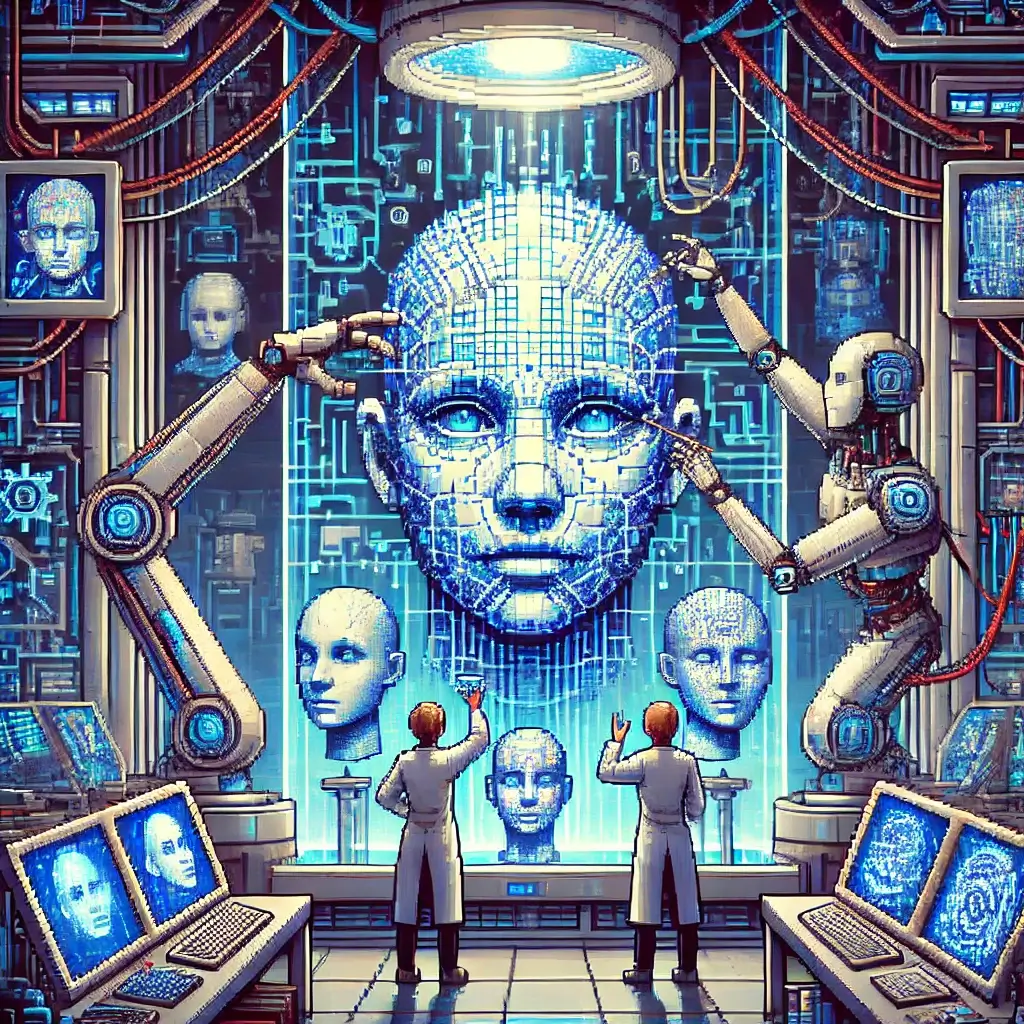
Unleashing 100% Realism: 3 AI Breakthroughs in Digital Avatar Creation!
Alright, folks, buckle up! You know how sometimes you see something online, a photo or a video, and you just have to do a double-take? You squint, you zoom in, you tilt your head, and still, you’re not quite sure if it’s real or not? Well, imagine that feeling, but multiplied by a thousand. That’s pretty much where we are with AI in hyper-realistic digital avatar creation. It’s no longer just the stuff of sci-fi movies; it’s happening right now, and it’s absolutely mind-blowing.
I mean, remember those clunky, almost cartoonish avatars from early video games? We’ve come light years from that. We’re talking about digital beings that can convincingly mimic human expressions, subtle movements, even the way light reflects off skin. It’s so good, it can be a little unsettling, like staring into the uncanny valley’s deeper end, but in the best, most revolutionary way possible. If you’re in any industry that deals with visuals, communication, or even just wants to connect with people in new ways, you *have* to pay attention to this.
I’ve been tracking this space for a while now, and honestly, every few months there’s a new development that makes my jaw drop. It’s like watching a magic show where the magician keeps pulling bigger and bigger rabbits out of the hat. And the best part? We’re still just at the beginning. So, let’s dive into this wild world and explore how AI is transforming the very fabric of digital presence.
—
Table of Contents
—
Introduction: Why Digital Avatars are the Next Big Thing
Let’s be honest, we live in an increasingly digital world. From Zoom calls that replaced boardrooms to virtual concerts that filled the void of live events, our lives are becoming more and more intertwined with screens. And in this digital landscape, how we represent ourselves, how we interact, and how we convey information is paramount. This is where hyper-realistic digital avatars step in, not just as a cool gimmick, but as a fundamental shift in how we experience the virtual.
Think about it: for years, we’ve been limited by static images or rudimentary 3D models. But what if your online presence could be as nuanced and expressive as your real-life self? What if you could attend a virtual conference, deliver a presentation, or even just hang out with friends, all through a digital counterpart that looks, moves, and even sounds uncannily like you? This isn’t just about vanity; it’s about breaking down barriers to communication, enhancing immersion, and opening up entirely new avenues for commerce, entertainment, and education.
I remember trying to customize avatars in early games, painstakingly picking from a handful of hairstyles and pre-set faces, only for the end result to look nothing like me – or anyone I knew for that matter! Now, we’re witnessing a revolution where your digital double can capture the subtle arch of your eyebrow, the unique way your lips curve when you smile, or even the slight tilt of your head when you’re listening intently. This isn’t just about looking good; it’s about conveying emotion, building trust, and truly feeling present in a virtual space.
—
The Genesis of Realism: How AI Gets Us There
So, how exactly are we getting to this incredible level of realism? The secret sauce, my friends, is Artificial Intelligence, particularly in areas like machine learning and computer vision. It’s not just a single breakthrough; it’s a confluence of several rapidly advancing technologies all working in concert.
At its core, creating a hyper-realistic digital avatar involves capturing a vast amount of data about a person’s appearance and movements, and then using AI to translate that data into a deformable 3D model. This isn’t a simple copy-paste job. AI models are trained on enormous datasets of human faces, bodies, and motions. They learn the intricate patterns, the subtle nuances, and the underlying structures that make a human face look truly human.
Think of it like an artist learning to draw. They don’t just copy what they see; they study anatomy, light, shadow, and expression. AI does something similar, but at an unprecedented scale and speed. It identifies the statistical regularities and variations that define human appearance, allowing it to generate new, convincing variations or accurately replicate existing ones. It’s like having a digital sculptor who has studied every human face ever, and can now craft one with unparalleled precision.
—
Key AI Techniques Powering Hyper-Realism
Let’s get a little technical for a moment, but I promise to keep it digestible. It’s important to understand *how* AI is pulling off these digital miracles. There are a few star players in this game, each contributing a vital piece to the hyper-realistic puzzle.
Generative Adversarial Networks (GANs) – The Artistic Duel
If you’ve heard any buzz about AI art or deepfakes, you’ve probably come across GANs. These are perhaps the most exciting and transformative tools in the avatar creation arsenal. Imagine two AI networks locked in a perpetual artistic duel: one, the “generator,” tries to create realistic images, and the other, the “discriminator,” tries to tell if the image is real or fake. It’s like a perpetual game of cat and mouse.
The generator gets better and better at fooling the discriminator, and the discriminator gets better and better at detecting fakes. This adversarial training process pushes both networks to incredibly high levels of sophistication. The result? GANs can generate incredibly lifelike faces, complete with intricate details like pores, wrinkles, and even stray hairs. It’s like they’re learning the very essence of “human face” and then creating brand new ones from scratch. This is what allows for the creation of unique, plausible digital identities.
Want to dive deeper into GANs? Check out this fascinating article from IBM: Learn About GANs
Neural Rendering – Bringing Avatars to Life with Light
Okay, so you’ve got a super-realistic 3D model. But what good is it if it looks flat and lifeless? This is where neural rendering comes in. Traditional rendering relies on complex calculations of light physics. Neural rendering, on the other hand, uses AI to learn how light interacts with surfaces from real-world data.
Instead of explicitly calculating every ray of light, the AI learns a “neural representation” of a scene or an object. This allows for incredibly realistic lighting, shadows, and reflections, even when the avatar is viewed from different angles or in different environments. It’s the difference between a static photograph and a living, breathing being that reacts to its surroundings. This is crucial for making avatars feel truly present and integrated into a virtual world. Imagine an avatar whose skin subtly shimmers as if in direct sunlight, or whose eyes reflect the ambient light of a room – that’s neural rendering at play.
Deep Learning for Facial Animation and Expression – The Soul of the Avatar
A static, realistic face is impressive, but what makes an avatar truly captivating is its ability to express emotion. This is where deep learning shines. AI models are trained on vast datasets of human facial expressions and movements. They learn the subtle muscle movements that create a smile, a frown, or a look of surprise.
These models can then translate audio input (like a person speaking) or even live video of a person’s face into realistic avatar animations. This means your avatar can mimic your speech, your head movements, your blinks, and even the tiny micro-expressions that convey so much about how you’re feeling. It’s what gives the avatar its “soul,” making it feel less like a puppet and more like an extension of yourself. It’s what makes a digital conversation feel genuinely human.
For more on how deep learning is transforming animation, check out Nvidia’s research in this area: Nvidia Deep Learning in Animation
—
Beyond the Screen: Real-World Applications Explode
So, we’ve talked about the “how.” Now, let’s talk about the “what for.” The applications of hyper-realistic digital avatars are truly staggering, extending far beyond just cool tech demos. They’re already starting to revolutionize various industries, and we’re just scratching the surface.
Entertainment and Media – The New Hollywood Star
This is probably the most obvious one, right? Imagine movies where actors can be digitally de-aged or even recreated entirely. Think about digital stunt doubles that are indistinguishable from the real thing, or even entirely AI-generated characters that can deliver nuanced performances. This isn’t just about special effects; it’s about new forms of storytelling. We could see virtual pop stars, digital hosts for TV shows, or even entire interactive narratives driven by AI avatars.
The possibilities are endless, from virtual concerts featuring deceased legends to entirely new forms of interactive entertainment where you can converse with your favorite digital characters. The film industry is already experimenting with this, and the results are often breathtaking. This is the future of digital performance!
Virtual Communication and Collaboration – Your Professional Digital Twin
Forget grainy webcams and awkward video calls. Imagine attending a virtual meeting where everyone is represented by a high-fidelity avatar that precisely mimics their real-time expressions and gestures. This could vastly improve the feeling of presence and connection in remote work environments. For global teams, the ability to interact with a digital counterpart that feels truly “there” could bridge geographical distances like never before.
Beyond meetings, think about virtual classrooms where AI tutors can interact with students in a much more engaging and personalized way. Or even customer service, where an AI avatar can provide a more human-like interaction than a chatbot, reducing frustration and improving the user experience.
E-commerce and Retail – The Ultimate Personal Shopper
Picture this: you’re shopping for clothes online, and instead of guessing how that dress will look on you, you can see it draped perfectly on a digital avatar of yourself! This is already being explored, allowing for highly personalized virtual try-ons. Beyond fashion, imagine a digital salesperson avatar that can guide you through a product, answering questions and demonstrating features in a highly interactive way. This could revolutionize online shopping, making it a much more engaging and personalized experience, blurring the lines between online and in-store.
Healthcare and Therapy – Digital Companions and Guides
This is where things get truly impactful. Imagine AI avatars designed to provide companionship to the elderly, offering conversation and emotional support. Or perhaps avatars that serve as virtual therapists, providing accessible mental health support without the stigma often associated with in-person sessions. These avatars could be programmed with vast amounts of medical knowledge, assisting in patient education, explaining complex procedures, or even guiding rehabilitation exercises. The potential for improved access to care and personalized support is immense.
For more on how AI is impacting healthcare, check out the World Health Organization’s initiatives: WHO AI in Health
—
The Elephant in the Room: Ethical Quandaries and Challenges
Now, I’m a big fan of technological progress, but I’m also a realist. With great power comes great responsibility, and hyper-realistic AI avatars bring with them a whole host of ethical considerations and challenges that we absolutely *must* address. It’s not all sunshine and digital roses.
The Uncanny Valley – Still a Hurdle?
We’ve come so far, but the “uncanny valley” effect is still a real thing. That’s the phenomenon where something looks almost human, but not quite, leading to a feeling of discomfort or even revulsion. While AI has made incredible strides in overcoming this, there are still moments where an avatar might just feel a little… off. We need to keep pushing for truly seamless, comfortable interactions, because if an avatar makes you feel uneasy, its utility is severely limited.
Deepfakes and Misinformation – The Dark Side
This is perhaps the most serious concern. The same technology that allows for incredible realism can also be abused to create convincing but entirely fake videos and images. This “deepfake” technology has already been used for malicious purposes, from spreading misinformation and propaganda to creating non-consensual explicit content. As avatars become more realistic, the potential for misuse intensifies. We need robust detection mechanisms and strong ethical guidelines to combat this threat. It’s a delicate balance: fostering innovation while safeguarding against abuse.
Identity and Ownership – Who Owns Your Digital Self?
If a company creates a hyper-realistic avatar of you, who owns that digital representation? What happens if your avatar is used in ways you didn’t consent to? These questions of digital identity, intellectual property, and consent are becoming increasingly critical. We need clear legal frameworks and ethical standards to ensure individuals maintain control over their digital likenesses. It’s essentially your digital face and body, and you should have ultimate say over how it’s used.
Bias in AI Training Data – The Mirror of Our Flaws
AI models are only as good as the data they’re trained on. If the datasets used to train avatar creation AI are biased (e.g., predominantly featuring certain demographics), the resulting avatars may perpetuate those biases, leading to less accurate or even stereotypical representations of underrepresented groups. Ensuring diverse and inclusive training data is paramount to creating equitable and universally appealing avatars. We don’t want our digital future to reflect the biases of our past.
—
Crystal Ball Gazing: The Future of AI Avatars
So, what’s next? If you think what we have now is impressive, just wait. The pace of innovation in AI is relentless, and the future of hyper-realistic digital avatars is even more exciting, and perhaps a little mind-bending.
Truly Autonomous and Intelligent Avatars
Right now, many avatars are controlled by human input or pre-programmed scripts. In the future, we’ll see increasingly autonomous avatars powered by advanced AI. Imagine an avatar that can engage in natural, flowing conversations, learn from interactions, and even develop its own personality over time. These won’t just be digital puppets; they’ll be intelligent agents capable of complex interactions, potentially blurring the lines between human and AI even further.
Personalized AI Companions and Assistants
Beyond functional roles, we could see avatars evolve into highly personalized companions. Imagine an AI companion that learns your preferences, understands your moods, and provides tailored support or entertainment. This could be incredibly beneficial for social interaction, learning, and even mental well-being, especially for those who might feel isolated. Think of it as a super-advanced virtual friend, perfectly attuned to your needs.
The Metaverse and Beyond – Our Ubiquitous Digital Selves
The concept of the metaverse – a persistent, shared virtual world – relies heavily on compelling digital avatars. As these virtual spaces become more sophisticated, your hyper-realistic avatar will be your primary representation. You’ll move seamlessly between different virtual environments, conducting business, socializing, and exploring, all as your digital self. This isn’t just about a single avatar; it’s about a versatile, adaptable digital identity that can exist across multiple platforms and experiences. It’s like having a universal passport for the digital realm.
—
Final Thoughts: Are You Ready for Your Digital Twin?
The journey of AI in hyper-realistic digital avatar creation is a testament to human ingenuity and technological ambition. We’ve moved from blocky pixelated figures to digital doppelgangers that can fool the human eye. This technology is not just changing how we look online; it’s fundamentally reshaping how we interact, how we learn, how we create, and even how we understand ourselves in an increasingly digital world.
While the potential benefits are enormous – from enhanced communication to groundbreaking entertainment – we cannot shy away from the ethical responsibilities that come with such power. As this technology matures, we, as a society, must engage in thoughtful discussions about consent, ownership, authenticity, and the potential for misuse. It’s a conversation we need to have now, before the technology outpaces our ability to govern it.
So, are you ready for your digital twin? Are you prepared to meet hyper-realistic AI avatars in your daily life? I certainly am, with a mix of excitement and a healthy dose of caution. The future is here, and it’s looking incredibly, unnervingly real. And trust me, you won’t want to miss a single moment of it. The next time you see a digital avatar, take a moment to appreciate the sheer complexity and artistry behind it. It’s truly a marvel of our time.
Digital Avatar, AI, Hyper-Realistic, Metaverse, Deepfake