
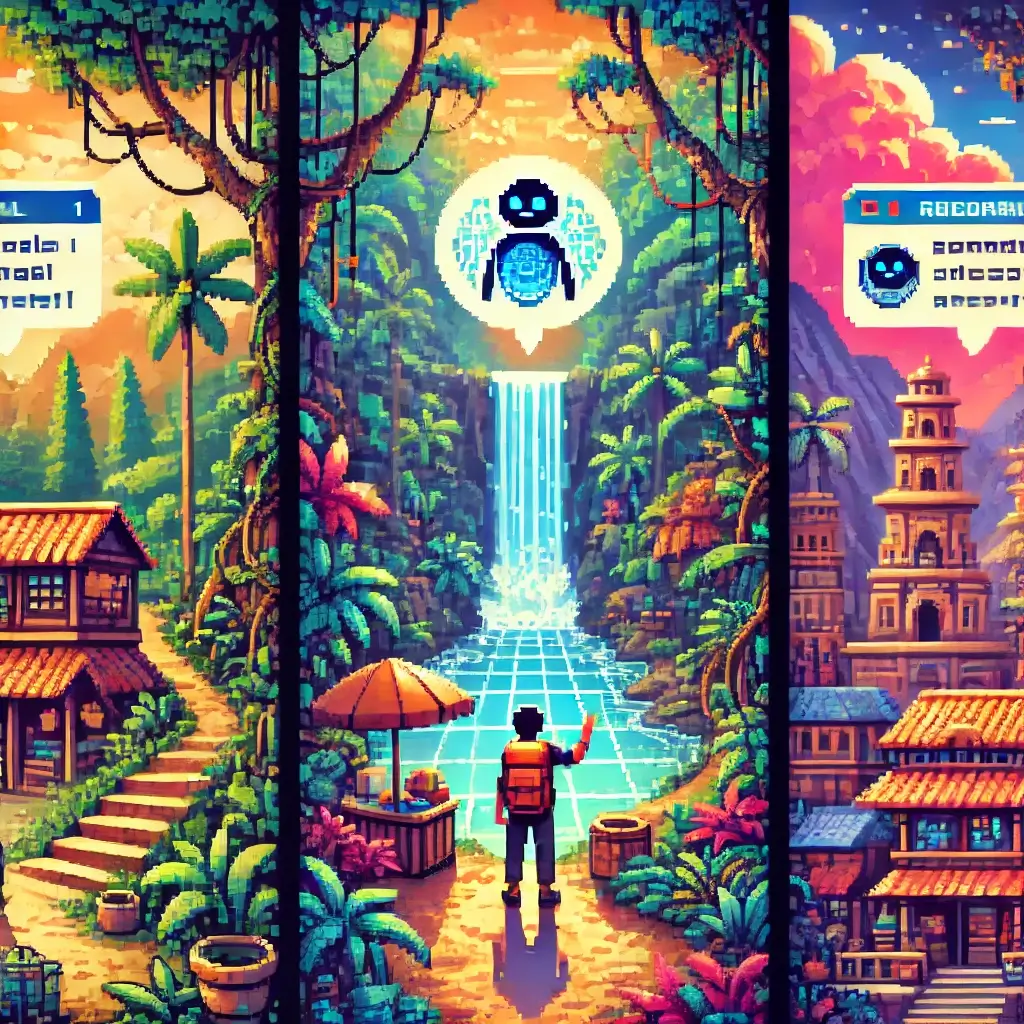
5 Mind-Blowing Ways Conversational AI is Unlocking Obscure Destinations!
Hello, fellow wanderers!
Are you tired of the same old travel guides?
The ones that send you to crowded tourist traps and tell you the same stories everyone else has heard a million times?
I know I am.
I’ve spent a lifetime chasing the horizon, seeking out those hidden gems that most people only read about in a dusty old book.
And let me tell you, it’s not easy.
Finding truly unique places requires a lot of legwork, a bit of luck, and a whole lot of digging through obscure forums and local blogs written in languages you don’t speak.
But what if I told you there’s a new co-pilot for your journey, a travel companion that never gets tired, speaks every language, and has an encyclopedic knowledge of the world’s most fascinating, off-the-beaten-path locations?
That’s exactly what we’re talking about today.
We’re diving deep into the incredible world of conversational AI for virtual travel guides to obscure destinations.
This isn’t some futuristic sci-fi dream; it’s happening right now, and it’s changing the way we explore our planet.
Think of it like having a seasoned, local expert in your pocket, one who knows the best time to visit that remote mountain monastery, the name of the family-run cafe with the best coffee, and the secret hiking trail that leads to a breathtaking, unphotographed waterfall.
But before we get into the nitty-gritty, let’s set the stage.
Why are obscure destinations so special?
Because they offer something that big-name tourist spots can’t: authenticity.
When you travel to a lesser-known place, you’re not just a tourist; you’re a temporary resident.
You get to experience the local culture, interact with the community, and discover things that haven’t been sanitized for mass consumption.
This is the kind of travel that truly enriches the soul, and conversational AI is the key that’s unlocking the door to these experiences for everyone.
Table of Contents
- The Death of the Generic Travel Guide: How Conversational AI is Personalizing Your Journey
- Conversational AI: Your Personal Navigator to Obscure Destinations
- From Language Barriers to Cultural Understanding: Conversational AI’s Secret Superpowers
- Why Conversational AI is the Ultimate Companion for the Modern Explorer
- Beyond the Itinerary: The Future of Virtual Travel Guides to Obscure Destinations
The Death of the Generic Travel Guide: How Conversational AI is Personalizing Your Journey
Let’s be real for a second.
The old way of travel planning is, well, old.
You buy a bulky guidebook, or you spend hours scrolling through a dozen different travel blogs, trying to piece together a coherent itinerary.
It’s like trying to build a jigsaw puzzle with half the pieces missing.
The information is often outdated, one-size-fits-all, and doesn’t take into account your specific interests, budget, or travel style.
If you’re a foodie, the guide might focus on historical sites.
If you’re an adventure junkie, it might suggest relaxing by a beach.
It’s just not a good fit.
Now, imagine a different scenario.
You open a virtual travel guide powered by conversational AI.
It greets you with a friendly, “Hey there! Where are you thinking of going?”
You type in “I’m looking for a unique destination in Southeast Asia, somewhere without a lot of tourists. I love hiking, local street food, and learning about ancient history.”
And just like that, the AI starts a conversation with you.
It doesn’t just spit out a list of places.
It asks follow-up questions: “Are you comfortable with a more rustic experience, or would you prefer something with more modern amenities?” or “What’s your budget looking like for this trip?”
This back-and-forth isn’t just for show.
It’s the AI’s way of building a personal profile of you, the traveler.
It’s learning your preferences, your tolerances, and your dreams for this trip.
This is the core of what makes conversational AI so revolutionary for exploring obscure destinations.
It’s not about generic recommendations; it’s about a deeply personalized, tailor-made journey.
The AI can sift through millions of data points—from satellite imagery and local government data to social media posts and academic papers on regional folklore—to create a travel plan that’s uniquely yours.
This level of personalization is simply impossible with traditional guidebooks or even static travel blogs.
The AI becomes your personal travel agent, historian, and a local friend all rolled into one.
And it doesn’t stop there.
Let’s say you’ve settled on a destination, like the stunning, lesser-known region of Svaneti in Georgia.
Your conversational AI guide can then create a day-by-day itinerary.
“Day 1: Arrive in Mestia, take a scenic drive to Ushguli, and hike to the Lamaria Church. I’ve found a family-run guesthouse that serves traditional Kubdari bread. Want me to book a room for you?”
It’s this kind of seamless, proactive assistance that separates a simple search engine from a true conversational companion.
It anticipates your needs and provides solutions before you even know you need them.
You’re no longer just planning a trip; you’re having a conversation about your adventure.
And that, my friends, is a game-changer.
It’s the end of generic, and the beginning of genuinely personal travel.
Conversational AI, Virtual Travel Guides, Obscure Destinations, Personalized Travel, AI-Powered Itineraries
Conversational AI: Your Personal Navigator to Obscure Destinations
Now that we’ve established the ‘why,’ let’s get into the ‘how.’
How exactly does this technology serve as your personal navigator to places that are barely on the map?
Think of the challenges of traveling to an obscure location.
Information is scarce, and what you can find is often unreliable.
Road conditions?
Public transport schedules?
Where to find a doctor in a pinch?
These are the kinds of details that can make or break a trip, and they’re almost impossible to find in a standard guidebook.
This is where the true power of conversational AI for virtual travel guides to obscure destinations shines.
It can pull from a vast network of real-time data sources to give you the most current and accurate information.
Imagine you’re in a remote village in the Atlas Mountains of Morocco.
You’re hiking and you get lost.
Instead of panicking, you can pull out your phone and ask your AI guide: “Hey, I think I’m off the main trail. Can you help me find my way back to the village of Imlil?”
The AI can access GPS data, satellite maps, and even crowd-sourced information from other travelers to pinpoint your exact location and provide step-by-step directions.
But it doesn’t stop at just navigation.
Let’s say you’re curious about the local flora and fauna.
You can point your phone’s camera at a strange flower and ask, “What is this?”
The AI, using image recognition technology, can identify the plant and give you a detailed description, including its local name, traditional uses, and any cultural significance.
It’s like having a botanist and a cultural anthropologist right there with you.
And what about logistics?
Let’s face it, planning for the unexpected is key when you’re off the beaten path.
“Is there a local festival happening this week?”
“What’s the protocol for asking for a photo of a local?”
“Where can I find a reliable car rental service that operates in this region?”
The AI can answer these questions instantly, providing context and cultural sensitivity where a simple search engine would fail.
It can also help you with a crucial part of any trip: making the most of your time.
“I have three hours free this afternoon. What’s something interesting I can do nearby that isn’t on the tourist map?”
The AI, with its understanding of your preferences and the local landscape, might suggest visiting a hidden artisan workshop, exploring a less-traveled side street, or grabbing a cup of tea at a cafe known only to locals.
This is the kind of insight that was once reserved for those with the time and resources to spend weeks in a single location, making friends and building trust with locals.
Now, it’s available to anyone with a smartphone and a conversational AI guide.
It’s like having an all-knowing Sherpa guiding you through the unknown, making the world feel a little smaller and a lot more accessible.
Conversational AI, Virtual Travel Guides, Obscure Destinations, AI Navigator, Real-time Information
From Language Barriers to Cultural Understanding: Conversational AI’s Secret Superpowers
Okay, let’s talk about one of the biggest hurdles for any traveler venturing into the unknown: the language barrier.
How many times have you found yourself in a foreign country, trying to order food or ask for directions with a phrasebook and a lot of hand gestures?
It’s a universal experience, but it can also be a frustrating and isolating one.
When you’re in a big city, you can often find someone who speaks a little English.
But in an obscure destination, that’s not always the case.
This is where conversational AI becomes more than just a guide; it becomes a bridge.
Imagine you’re at a remote bus station in rural Vietnam.
You need to buy a ticket to a town whose name you can’t pronounce, and the ticket agent doesn’t speak a word of English.
You can simply hold up your phone and say, “I need a ticket to Hà Giang.”
The AI can translate your request in real-time and even speak it aloud in perfect Vietnamese.
The ticket agent can then respond in Vietnamese, and the AI can translate it back to you.
This isn’t just a simple translation app, mind you.
A good conversational AI guide understands context.
It knows that “I’m feeling sick” might require a different set of responses than “I’m looking for a hospital.”
It can provide culturally appropriate phrases, explaining not just *what* to say, but *how* to say it to be polite and respectful.
This brings us to the next, and perhaps most important, superpower of conversational AI: fostering cultural understanding.
It’s one thing to know the facts about a place; it’s another to understand its soul.
When you visit an obscure destination, you want to immerse yourself in the local culture, not just observe it from a distance.
A conversational AI guide can provide you with deep, nuanced insights that you won’t find in a standard travel book.
“What’s the history behind this intricate carving on the temple?”
“Why is it considered a sign of respect to accept a cup of tea with both hands in this region?”
“What’s the meaning of the traditional dance being performed at the festival?”
The AI can answer these questions, drawing from a vast database of cultural knowledge, historical records, and local stories.
It can explain the significance of local customs, the meaning behind traditional symbols, and the unwritten rules of social etiquette.
This kind of knowledge empowers you to interact with the local community in a meaningful and respectful way, turning a simple trip into a profound cultural exchange.
So, while the language barrier might be a thing of the past, the real magic of conversational AI is in its ability to tear down the walls of cultural misunderstanding, one question at a time.
Conversational AI, Language Barriers, Cultural Understanding, Virtual Travel Guides, Obscure Destinations
Why Conversational AI is the Ultimate Companion for the Modern Explorer
Alright, we’ve talked about personalization, navigation, and cultural understanding.
But what about the bigger picture?
Why is conversational AI for virtual travel guides to obscure destinations the ultimate tool for the modern explorer?
Because it’s about more than just getting from point A to point B.
It’s about having a co-pilot that enhances every aspect of your journey, making it safer, more exciting, and more enriching.
Let’s start with safety.
Traveling to remote locations often comes with inherent risks.
Weather can change in an instant, political situations can be volatile, and medical facilities can be few and far between.
A conversational AI guide can be your lifeline in these situations.
“Are there any flash flood warnings in the area I’m hiking?”
“What are the emergency numbers for the local police and hospital?”
“I’ve got a stomach ache. What’s a local remedy, and where’s the nearest pharmacy?”
The AI can provide real-time updates and critical information, acting as your personal risk assessment officer.
It can also help you with practical, everyday tasks that can be surprisingly challenging in a foreign country.
“How do I pay for a bus ticket here?”
“Is it customary to tip at restaurants in this region?”
“Can you help me negotiate a price for this souvenir at the market?”
These are the kinds of questions that make a trip go smoothly, and a conversational AI guide is perfectly equipped to answer them.
But beyond the practicalities, the real benefit is the ability to truly connect with a place.
The AI can act as a storyteller, weaving together the history, legends, and personal stories of the people and places you encounter.
“Tell me about the folklore of this mountain range.”
“What’s a local legend about the river we’re crossing?”
“What’s the significance of the unique architecture of these houses?”
The answers to these questions turn a simple sight into a profound experience.
You’re not just looking at a mountain; you’re learning about the myths and stories that have shaped the community for centuries.
You’re not just crossing a river; you’re hearing the tale of how it got its name.
This depth of engagement is what sets conversational AI apart.
It’s not a static tool; it’s a dynamic companion that evolves with your journey, helping you to see the world not just as a traveler, but as a temporary resident, a learner, and a storyteller in your own right.
It’s the ultimate tool for anyone who believes that travel is about more than just ticking boxes on a list.
Conversational AI, Modern Explorer, Virtual Travel Guides, Obscure Destinations, Travel Safety
Beyond the Itinerary: The Future of Virtual Travel Guides to Obscure Destinations
So, what’s next?
Where does this road lead?
The current state of conversational AI for virtual travel guides to obscure destinations is already pretty mind-blowing, but the future is even more exciting.
Imagine a world where your virtual travel guide isn’t just on your phone.
It’s in your glasses, your headphones, or even your watch.
It’s providing you with augmented reality overlays, pointing out historical landmarks, translating menus in real-time, and giving you a heads-up about a potential roadblock on your hiking trail.
We’re talking about a seamless, immersive experience where the virtual and the real world blend together to create an unforgettable journey.
And the AI itself will become even more sophisticated.
It will be able to anticipate your needs based on a deeper understanding of your emotional state and biometric data.
Feeling a little overwhelmed by a bustling market?
The AI might suggest a quiet cafe nearby where you can take a break.
Seem a little stressed from a long day of travel?
It might recommend a relaxing evening activity or a local spa.
This isn’t about being intrusive; it’s about creating a truly empathetic and supportive travel companion.
It’s about making sure your trip is not just efficient, but also enjoyable and restorative.
And what about the impact on the destinations themselves?
A well-designed conversational AI guide can also be a powerful tool for sustainable tourism.
It can guide travelers to locally owned businesses, provide information about responsible travel practices, and help to distribute tourist traffic more evenly, preventing the overcrowding that can damage delicate ecosystems and cultural sites.
By providing detailed, hyper-local information, these guides can help ensure that the benefits of tourism are shared more equitably with the local communities, turning a simple trip into a force for good.
So, as you can see, the future of travel is not just about technology.
It’s about connection, understanding, and respect.
It’s about using the power of conversational AI to create a world where every traveler can be an explorer, and every obscure destination can be a discovery waiting to happen.
Now, go out there and explore something new.
Just be sure to bring your new AI friend along for the ride.
Explore More on National Geographic Travel
Find Your Next Adventure with Lonely Planet
Discover Hidden Wonders with Atlas Obscura
Conversational AI, Virtual Travel Guides, Obscure Destinations, Future of Travel, Sustainable Tourism
🔗 AI is Predicting Geological Disasters Posted 2025-08-12 08:29 UTC 🔗 AI’s Forensic Accounting Posted 2025-08-11 09:46 UTC 🔗 AI-Powered Packaging Innovations Posted 2025-08-10 07:48 UTC 🔗 AI Wearable Tech Will Change Your Fitness Posted 2025-08-09 04:41 UTC 🔗 Machine Learning Models for Niche Posted 🔗 The AI Revolution: Predicting Disasters Posted